
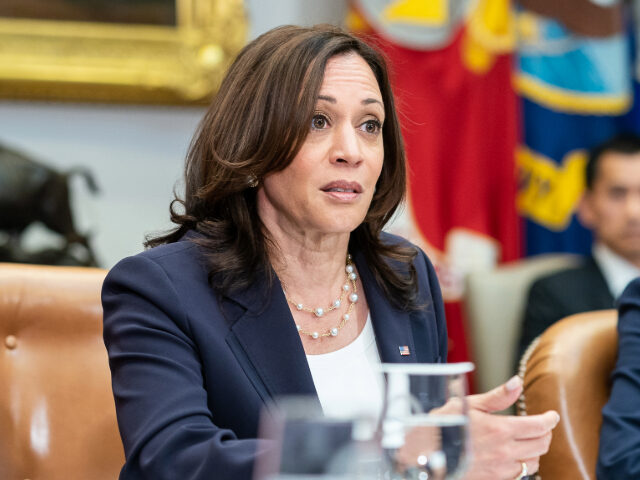
The Washington Post’s editorial board recently delivered a scathing critique of Vice President Kamala Harris’s newly announced economic plan, which they argued missed the mark on addressing the economic concerns of the American public. In an editorial published on Friday, the board expressed disappointment with Harris’s approach, describing it as a “squandered” opportunity to present a meaningful and substantial plan.
They want you to think Kamala is drawing crowds in the TRILLIONS! CLICK HERE to Watch The Rants of Izzo Show!
The editorial emphasized that Americans are still deeply concerned about the high cost of living, particularly in areas such as groceries, housing, and everyday items like a Big Mac, which has seen prices soar to $5.29 in some places. Although inflation has decreased since its peak in 2022, prices remain significantly higher compared to the Trump administration years. The editorial board noted that this reality presents a significant political challenge for Harris, particularly as she positions herself as a key figure in the Biden administration’s economic strategy.
One of the main criticisms leveled by the editorial board was Harris’s decision to blame corporate entities for price gouging, rather than addressing the more complex causes of inflation. The editorial suggested that Harris could have taken a more transparent approach by explaining to voters that inflation spiked in 2021 due to pandemic-related supply chain disruptions, and that the Federal Reserve’s policies, supported by the Biden-Harris administration, are working to slow it down. Instead, Harris chose to target grocery stores, landlords, pharmaceutical companies, and other businesses, promising to have the Federal Trade Commission enforce a vaguely defined federal ban on price gouging.
The Art of Hormone Balance with Orgasms!
Listen to “The Art of Hormone Balance with Orgasms!” on Spreaker.
In her economic plan, Harris also promised to build three million new homes over the next four years, crack down on corporate price gouging, and provide families with a $6,000 child tax credit. While the editorial acknowledged that her housing plan had some merit, it also highlighted significant flaws. The board agreed that Harris had correctly identified the problem of housing affordability as being rooted in an insufficient supply of homes. However, they criticized her proposed solution of offering $25,000 in down payment assistance to first-time home buyers, arguing that it could exacerbate the problem by increasing demand without addressing the supply issue.
The editorial board pointed out that nearly 1.5 million homes were built in 2023 alone, making Harris’s goal of three million homes over four years appear less ambitious than it initially sounded. Moreover, they argued that the down payment assistance could put upward pressure on housing prices, making homes even less affordable. The board suggested that Harris’s plan would be more effective if it included measures to eliminate other demand-side housing subsidies, such as the mortgage interest deduction, which they described as a significant drain on federal revenue that primarily benefits wealthy Americans.
Another key criticism from the editorial was Harris’s pledge not to raise taxes on households earning $400,000 or less annually. The board noted that this promise failed to account for the recent increase in the number of families earning over $400,000, and questioned how Harris’s proposed policies would be funded without increasing taxes on this broader segment of the population. A report from the Committee for a Responsible Federal Budget highlighted this issue, estimating that without a concrete plan to raise revenue, Harris’s policies could add $1.7 trillion to the federal deficit over the next decade.
You need to know the story about Melissa Calusinski and her torture by the police!
The report indicated that the Harris campaign has suggested paying for these initiatives through taxes on corporations and high earners, as well as supporting the revenue-raising measures in President Joe Biden’s Fiscal Year 2025 budget. However, the campaign has yet to provide specific offsets or detailed plans for how these goals will be achieved.
The Washington Post’s editorial board concluded by underscoring the challenges facing Harris as she seeks to address the economic concerns of the American public. They emphasized that while the vice president has identified some of the right problems, her proposed solutions fall short of addressing them effectively. The editorial called for more substantive and transparent approaches to economic policy, particularly in light of the ongoing challenges related to inflation and the high cost of living.
As Harris continues to campaign and promote her economic agenda, it remains to be seen how she will respond to these criticisms and whether she will adjust her strategy to better meet the needs and expectations of the American people.
Have something you want to share with us? Email [email protected] and send us any story that you want us to cover on the show!
-Dominick Izzo