
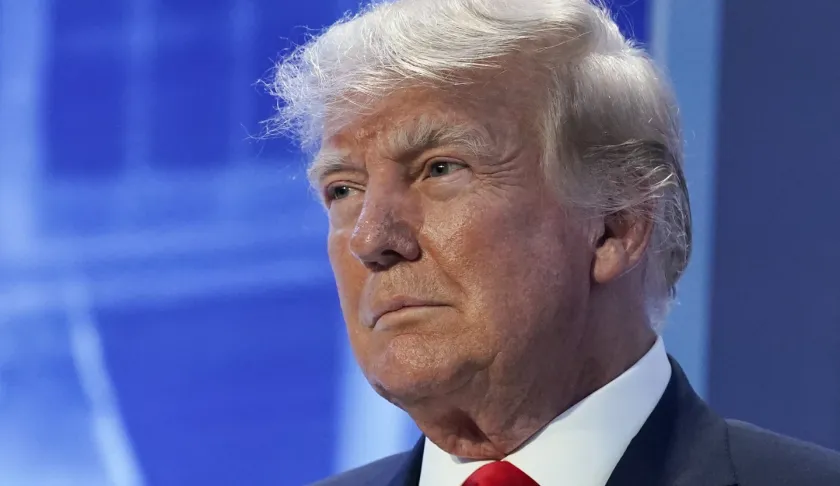
Former President Trump has been indicted as part of special counsel Jack Smith’s investigation over his efforts to overturn the 2020 election, which culminated in the Jan. 6, 2021, attack on the Capitol.
The former president, who is the leading Republican candidate in the 2024 presidential field, faces four counts. The indictment details a campaign of “dishonesty, fraud and conceit” to obstruct a “bedrock function” of a democracy.
News of the indictment comes after Trump said he received a target letter informing him that he is the subject in the probe, a move often followed by the filing of charges.
A federal grand jury in Washington, D.C., has been hearing evidence in the case when it typically meets Tuesdays and Thursdays.
In the two months between Election Day in 2020 and Jan. 6, 2021, Trump mounted a wide-ranging campaign to subvert Joe Biden’s victory in the presidential election.
Trump and his advisers spread false information about voter fraud, urged Republican state officials to undermine the results in states that Joe Biden won, assembled false slates of electors and pressured Mike Pence, the vice president, to unilaterally toss out the legitimate results.
The effort culminated on Jan. 6, when a mob of Trump supporters stormed the Capitol and disrupted the peaceful transfer of power. Federal prosecutors led by special counsel Jack Smith have charged Trump with four federal crimes stemming from his attempts to derail the transfer of power.
Smith’s Jan. 6 investigation followed the work of the House Select Committee on the Jan. 6 Attack, which voted in December 2022 to refer Trump (along with lawyer John Eastman) to the Justice Department for prosecution.
A Washington grand jury met for months and heard testimony from many former Trump aides and officials in the Trump White House, including Pence.
On Aug. 1, 2023, the grand jury approved an indictment against Trump, charging him with an extraordinary conspiracy that threatened to disenfranchise millions of Americans.
2 felony counts (including one conspiracy count) of obstructing an official proceeding under 18 U.S.C. § 1512
|
1 felony count of conspiracy to defraud the United States under 18 U.S.C. § 371
|
1 felony count of conspiracy against rights under 18 U.S.C. § 241 rump has been charged with four crimes in the Jan. 6 investigation.
Two relate to the disruption of Congress’ certification of the electoral vote on Jan. 6, 2021. One alleges a scheme to defraud the United States through a sustained effort to impede the collection, counting and certification of votes in the 2020 election. And the fourth charge accuses Trump of a conspiracy to deprive citizens of a right secured under federal law — specifically, the right to vote and to have one’s vote counted.
-
Trump’s efforts to subvert the election were extensive, well documented and largely in public view. He and his allies spread lies about voter fraud and stoked the protests that led to the Jan. 6 attack.
-
Many of the top aides in the Trump administration testified to the grand jury, giving investigators remarkable insight into what was happening privately in Trump’s orbit during the critical two-month period and perhaps providing important evidence about Trump’s state of mind. Pence — who resisted Trump’s pressure to try to annul the election results on Jan. 6 — was the most notable witness. Others included Trump’s former chief of staff, Mark Meadows; his White House counsel, Pat Cipollone; his national security adviser, Robert O’Brien; and his senior policy adviser, Stephen Miller.
Weaknesses of the case
-
Trump may argue that his statements about the 2020 election were protected by the First Amendment or that, in challenging the election, he was merely relying on the advice of lawyers.
-
A president seeking to impede the peaceful transfer of power is unprecedented in American history — and the attempt to hold him legally accountable is similarly unprecedented. Some of the legal theories that prosecutors may rely on — like applying the “conspiracy against rights” statute to the context here — may raise novel issues that have rarely been tested in court. The charges are all federal crimes, so if Trump is reelected president, he could pardon himself (though the validity of a presidential self-pardon is unsettled).
-