

In a world where national security is paramount, the discovery that Chinese-owned companies have acquired farmland adjacent to 19 U.S. military bases is deeply troubling. This alarming revelation, reported by the New York Post, underscores the urgent need for stricter regulations and vigilant oversight to safeguard America’s strategic interests.
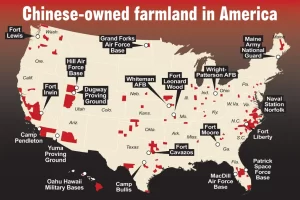
The significance of this issue cannot be overstated. The U.S. military bases serve as the bedrock of our national defense, housing critical infrastructure, sensitive technologies, and vital personnel. Allowing foreign entities, particularly those with ties to a rival superpower like China, to own land in such proximity to these installations poses a potential threat to national security that must not be ignored.
This issue is not new, but the extent of Chinese land ownership near key military sites has reached an unprecedented level. Reports indicate that Chinese-owned companies have strategically purchased farmland in states such as Texas, California, and Florida, raising red flags among security experts and policymakers alike. The proximity of these properties to military bases is alarming, as it provides potential opportunities for espionage, surveillance, and other covert activities that could undermine U.S. defense capabilities.
One of the most pressing concerns is the potential for espionage. China’s history of aggressive intelligence-gathering efforts is well-documented. The Chinese Communist Party (CCP) has a long track record of using various means to obtain sensitive information, including cyber espionage, human intelligence, and the exploitation of economic relationships. By owning land near military bases, Chinese entities could establish a physical presence that facilitates intelligence operations, such as intercepting communications, monitoring troop movements, and even accessing classified information.
Beyond the immediate security threats, there is also the issue of economic leverage and influence. China’s investment in American agriculture is part of a broader strategy to gain economic control and influence over key industries. By acquiring vast tracts of farmland, Chinese companies can exert significant influence over the U.S. food supply chain. This not only poses a risk to food security but also gives China a potential lever to apply economic pressure on the U.S. during times of geopolitical tension.

Check out our chat of growing people who enjoy free speech!
Recognizing the gravity of this situation, lawmakers have begun to take action. There have been calls for stricter regulations on foreign land ownership, particularly in sensitive areas near military installations. The proposed legislation aims to enhance transparency and ensure that any foreign investments in critical sectors are thoroughly vetted for potential security risks. While these measures are a step in the right direction, more comprehensive action is needed to address the multifaceted nature of this threat.
In addition to legislative measures, there is a need for increased vigilance at both the federal and state levels. The U.S. government must strengthen its monitoring and enforcement capabilities to detect and counter potential threats posed by foreign land ownership. This includes enhancing intelligence sharing between federal agencies and state governments, as well as providing resources and training to local law enforcement to identify and respond to potential security risks.
The Pride Month Agenda / Blue Blood Lizard People in Power / Fallen Angels in Antarctica
Ultimately, this issue is about protecting American sovereignty. Allowing foreign entities, particularly those from rival nations, to own land near military bases undermines our national security and jeopardizes the safety of our military personnel. It is imperative that we take decisive action to address this threat and ensure that our defense infrastructure remains secure.
The encroachment of Chinese-owned farmland near U.S. military bases is a stark reminder of the complex and evolving nature of modern threats. In an era where economic power and national security are increasingly intertwined, we must remain vigilant and proactive in safeguarding our strategic interests. The time for complacency is over; it is time for action to protect America’s security and sovereignty.
The discovery of Chinese-owned farmland adjacent to U.S. military bases is a wake-up call for America. It highlights the need for robust regulations, vigilant oversight, and a comprehensive strategy to counter foreign influence in critical sectors. As we navigate the challenges of the 21st century, it is essential that we prioritize national security and take concrete steps to protect our country from potential threats. The safety and sovereignty of the United States depend on it.