We need to talk about Voodoo and the fact that it is primarily practiced in Haiti.
This relevance comes because of the denial by people that Haitian migrants are not killing pets. There is a reason they are and it is Voodoo.
We can no longer afford to ignore that when people come into our country, they do not just arbitrarily cease their cultural practices.
Voodoo, often shrouded in mystery and misrepresentation, is a spiritual practice rooted in superstition and questionable beliefs. While its defenders claim it is a legitimate religion steeped in tradition, Voodoo’s dark origins and disturbing rituals cannot be ignored. Though some might argue it provides a sense of community and identity, in reality, it promotes archaic and dangerous customs that have caused fear, division, and suffering. The practice is most commonly associated with Haiti, a country whose culture and development have been deeply intertwined with this controversial and, at times, destructive religion.
The Problematic Origins of Voodoo
Voodoo’s roots lie in the African spiritual traditions of the Fon, Ewe, and Yoruba peoples, who practiced animism, spirit worship, and ancestor veneration long before the religion made its way to the Caribbean. With the transatlantic slave trade, these superstitions spread, eventually fusing with Catholicism and indigenous customs to form what we now know as Voodoo. What’s often overlooked is how this belief system, brought to Haiti through slavery, has perpetuated a culture of fear and spiritual manipulation for centuries.
After the Haitian Revolution, Voodoo gained a formal presence in the country. While this is often heralded as a victory for cultural preservation, it’s clear that Voodoo’s rise to prominence has only deepened Haiti’s struggles. Haiti remains one of the poorest countries in the Western Hemisphere, with Voodoo rituals and superstitions often blamed for exacerbating social and political instability. Instead of promoting progress and enlightenment, this so-called religion has helped to keep the people trapped in cycles of poverty, distrust, and mysticism.
Disturbing Core Beliefs
At the center of Voodoo is the belief in a distant, uninvolved supreme god known as Bondyè, and a multitude of spirits called lwa who interfere in human affairs. Voodoo practitioners, or vodouisants, claim that these spirits can be invoked for guidance, protection, or assistance. But at what cost? These spirits, divided into the Rada and Petro categories, require ritualistic appeasement and disturbing practices, often leading followers into dangerous and misguided actions.
Worshiping spirits that demand animal sacrifices and strange rituals is far from a practice that uplifts humanity. It’s a system designed to exploit the fears and superstitions of its followers. By turning to spirits and ancestors for help instead of seeking rational solutions, vodouisants entrench themselves in a spiritual quagmire that prevents them from confronting real-world challenges with reason and logic.
The Sinister Rituals of Voodoo
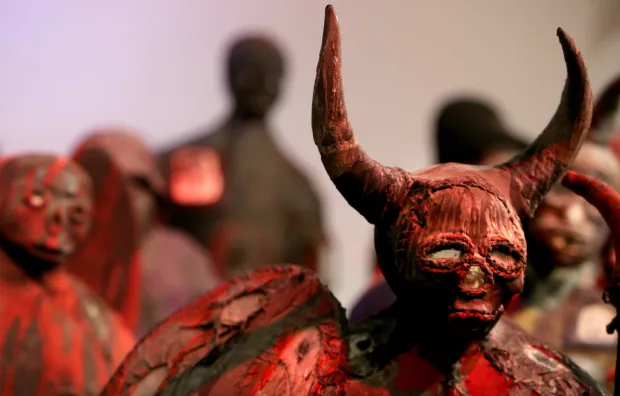
Voodoo’s rituals, celebrated by some as cultural expressions, are, in reality, an unsettling mix of arcane symbols, frenzied music, and animal sacrifice. These rituals are designed to summon spirits and ensure their favor, but the methods used are far from benign.
- Veves: These intricate symbols are drawn with flour, cornmeal, or ash to summon spirits to rituals. While some may see these symbols as harmless art, their real purpose is to call forth entities that demand appeasement. These veves are nothing more than physical manifestations of spiritual bondage.
- Music and Dance: The rhythmic drumming and frenetic dancing of Voodoo rituals are not merely cultural expressions but deliberate attempts to whip participants into a trance-like state. This practice, aimed at invoking spirits, often leads to possession—an experience where the spirit takes over a person’s body. Instead of fostering personal empowerment, these dances create a dangerous environment where individuals lose control of themselves, risking their physical and mental well-being.
- Possession: Perhaps the most disturbing aspect of Voodoo is the phenomenon of spirit possession. Practitioners believe that during rituals, spirits can “ride” a person, taking control of their body. This frightening practice is celebrated as a form of divine communication, but in reality, it strips individuals of their autonomy, leaving them vulnerable to manipulation by both spiritual forces and human authorities.
- Sacrifice: One of the darkest elements of Voodoo is the ritual of animal sacrifice. Chickens, goats, and other animals are often slaughtered as offerings to appease the lwa. These barbaric practices not only reflect a brutal disregard for life but also perpetuate violence in a culture that desperately needs healing and peace. While defenders of the religion claim that these sacrifices are misunderstood, the reality is that they promote a cycle of bloodshed and fear.
- Altars and Offerings: Voodoo altars, which are often decorated with symbols, food, and liquor to appease the spirits, serve as a constant reminder of the enslavement practitioners endure. These offerings, far from being simple gifts of gratitude, are tokens of submission to capricious and demanding spiritual entities that hold undue power over believers.
- Healing and Protection: Voodoo practitioners often claim that their rituals can bring about healing and protection, but these promises come with a price. Ritualistic practices, herbal remedies, and talismans (known as gris-gris) are used to manipulate people into believing that they can safeguard themselves from harm. These so-called “healers” often exploit the fears and vulnerabilities of others, profiting from their desperation while offering little in return but superstition.
The Damage of Voodoo on Modern Society
In modern-day Haiti, Voodoo continues to exert a powerful and often harmful influence. Far from being an innocent cultural practice, Voodoo perpetuates fear, ignorance, and violence. Many blame Voodoo for fueling the country’s persistent poverty, corruption, and instability. Rather than encouraging progress and enlightenment, the religion has, for centuries, trapped its followers in a web of fear, superstition, and ritualistic bondage.
Additionally, the sensationalized portrayal of Voodoo in Western media, though often exaggerated, stems from a genuine fear of the religion’s darker aspects. Voodoo’s association with “black magic” and curses may be exaggerated for entertainment, but they are rooted in the dangerous and manipulative practices that this religion often endorses. The world has advanced in science and reason, yet Voodoo remains a throwback to a time when fear and superstition ruled over logic and progress.
Voodoo, far from being a benign spiritual tradition, is a deeply problematic religion that promotes dangerous and primitive practices. From animal sacrifice and spirit possession to manipulation of vulnerable individuals, the dark side of Voodoo is undeniable. Haiti’s continued association with this religion has only perpetuated its struggles with poverty, instability, and underdevelopment. It’s time to confront the realities of Voodoo and question its place in modern society, where enlightenment and reason should prevail over superstition and fear. Instead of revering it as a cultural tradition, we should condemn Voodoo for the harm it has inflicted on generations of its followers.
I want to know what you think!
Send me your views, thoughts or what’s on your mind and we will feature on our newsletter or show!
Email to [email protected] OR
Leave a text, voice note or voicemail for the show on what your thoughts are at 708-982-0974
Connect with me on Spreely Social CLICK HERE to Check out Spreely Social
-Izzo