
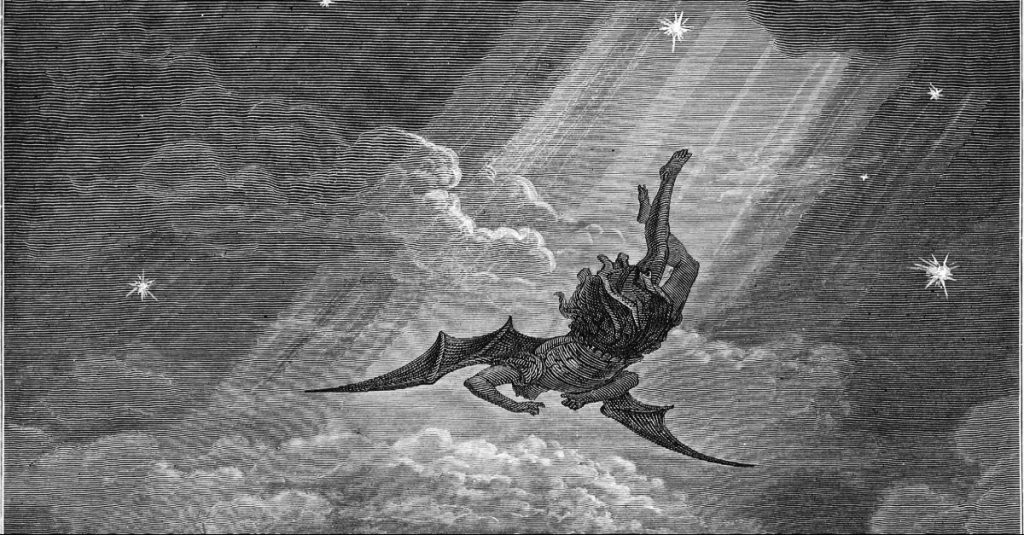
The Church of Lucifer, often shrouded in controversy and mystery, is an unconventional religious movement that has garnered attention for its association with American politics.
Established in the late 20th century, this controversial organization has stirred debates on the boundaries of religious freedom, separation of church and state, and the role of fringe groups in shaping American society.
This article delves into the history of the Church of Lucifer and its evolving relationship with American politics, shedding light on the impact and implications of this intriguing phenomenon.
Origins of the Church of Lucifer
The Church of Lucifer traces its roots to the broader Satanic movement that emerged in the mid-20th century. While Satanism itself has diverse manifestations, the Church of Lucifer stands out for its focus on Lucifer, often seen as a symbol of enlightenment, knowledge, and individualism.
Michael A. Aquino, a former member of Anton LaVey’s Church of Satan, founded the Temple of Set in 1975. This splinter group eventually evolved into the Church of Lucifer in the early 2000s.
The Church of Lucifer embraced a distinct form of Satanism, emphasizing the pursuit of personal excellence, knowledge, and self-determination, often contrasting itself with more theistic Satanic groups.
The Separation of Church and State
The United States, founded on the principles of religious freedom and the separation of church and state, has long struggled with the presence of controversial religious organizations.
The Church of Lucifer’s emergence tested the boundaries of the First Amendment, which protects freedom of religion. As a result, legal battles ensued over the years as the Church of Lucifer sought recognition as a legitimate religious entity.
The First Amendment, which reads, “Congress shall make no law respecting an establishment of religion or prohibiting the free exercise thereof,” has been interpreted in various ways by courts.
While it protects the right of individuals and groups to practice their religion freely, it also places limits on religious practices that may cause harm or infringe on the rights of others. This legal ambiguity has fueled the debate surrounding the Church of Lucifer.
Legal Battles and Recognition
One of the most notable legal battles involving the Church of Lucifer occurred in 2015 when the organization sought official recognition as a religion in the United States. This request was met with mixed reactions from the public and the government, as many argued that granting religious status to the Church of Lucifer would violate the core principles of religious freedom. In the end, the Internal Revenue Service denied the Church’s application for tax-exempt status, citing concerns about its religious legitimacy.
The denial of tax-exempt status was a significant blow to the Church of Lucifer, but it did not deter its members from continuing their activities. They continued to assert their religious rights and challenged the decision through the legal system, further highlighting the ongoing debate over the boundaries of religious freedom.
The Role of Political Influence
As the Church of Lucifer faced legal challenges and public scrutiny, its involvement in American politics became increasingly apparent. While the Church does not endorse any specific political party or candidate, it has become a symbol of rebellion and counterculture, attracting individuals who reject traditional religious norms and seek alternative belief systems.
One of the ways the Church of Lucifer has influenced American politics is by advocating for a strict separation of church and state. The Church has been vocal about its opposition to the intrusion of religious beliefs into politics, arguing that government policies should be based on rationality and secular principles. This stance has resonated with some secularists and atheists who support the Church’s mission to protect the secular nature of American governance.
Moreover, the Church of Lucifer has participated in public debates and legal battles that touch on issues related to religious freedom and the separation of church and state. For example, it has joined coalitions of secular organizations in challenging religious displays on public property, advocating for reproductive rights, and opposing the imposition of religious beliefs in public education.
Controversial Protests and Actions
The Church of Lucifer has made headlines with provocative public demonstrations and actions that challenge traditional religious norms and values. These actions are often seen as a form of political protest and a means of asserting the Church’s rights.
One such event was the erection of a Satanic monument on the grounds of the Arkansas State Capitol in 2018. The monument, featuring a statue of Baphomet, a deity associated with the Church of Satan and Luciferianism, was intended to counter the presence of a Ten Commandments monument on the same property. The Church of Lucifer, along with other Satanic and secular groups, argued that the presence of the Ten Commandments monument violated the principle of the separation of church and state.
This incident, along with similar actions in other states, ignited debates about religious displays on public property and the rights of minority religious groups. While the Church of Lucifer did not receive permission to permanently install its monument, the controversy surrounding the event prompted discussions about the limits of religious freedom and the role of fringe religious organizations in American society.
Conclusion
The Church of Lucifer, with its unconventional beliefs and practices, has remained a controversial presence in American society for decades. Its ongoing legal battles and political involvement have tested the boundaries of religious freedom and the separation of church and state. While the Church does not advocate for a specific political agenda, it has become a symbol of resistance to traditional religious norms and an advocate for secular governance.
The history of the Church of Lucifer is a reminder of the complexities of religious freedom in the United States and the ongoing debate about the role of fringe religious organizations in shaping American politics. As the Church of Lucifer continues to assert its rights and challenge societal norms, it remains a subject of fascination and controversy, both within the realm of religion and the broader political landscape.