
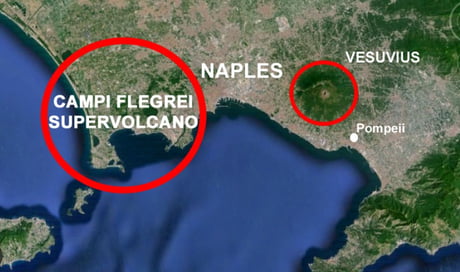
On May 20, 2024, the Campi Flegrei region of Italy experienced its strongest earthquake in four decades. Registering a magnitude of 4.2, this seismic event has not only reignited concerns about the geological volatility of the area but also highlighted the region’s complex relationship with its seismic and volcanic history.
The Seismic Event
The earthquake struck at approximately 3:10 AM local time, with its epicenter located near the town of Pozzuoli, just a few kilometers west of Naples. The tremor was felt throughout the Campania region, including the bustling city of Naples, causing widespread alarm among residents. Although there were no immediate reports of casualties or significant structural damage, the quake has nonetheless rattled the nerves of those living in one of the most densely populated and historically seismic regions of Italy.
Historical Context
Campi Flegrei, also known as the Phlegraean Fields, is a large supervolcano with a 13-kilometer-wide caldera, which has been the site of numerous volcanic and seismic events throughout history. The region’s last major eruption occurred in 1538, resulting in the formation of Monte Nuovo, a new volcanic hill. However, the area has been seismically active since then, with the last significant earthquake series, known as bradyseism, occurring in the early 1980s.
Bradyseism refers to the gradual uplift and subsidence of the Earth’s surface due to the movement of magma beneath the surface. The most recent period of intense bradyseism took place between 1982 and 1984, causing the ground in Pozzuoli to rise by nearly two meters. This uplift was accompanied by numerous earthquakes, the largest of which reached a magnitude of 4.0. The 2024 quake, therefore, marks a significant moment as it surpasses the strength of those experienced during that turbulent period.
Geological Implications
The recent earthquake has prompted scientists to closely monitor the Campi Flegrei caldera for signs of further activity. The region is considered one of the most dangerous volcanic areas in the world due to its potential for a large-scale eruption, which could have catastrophic consequences given the densely populated areas nearby. The National Institute of Geophysics and Volcanology (INGV) in Italy has intensified its surveillance, utilizing an array of instruments to measure ground deformation, gas emissions, and seismic activity.
Listen to “Become WAR. EP – 17 The Ultimate War Strategy for Victory” on Spreaker.
The 2024 earthquake’s magnitude is a stark reminder of the region’s volatile nature. While the quake itself did not cause major destruction, it serves as a critical data point for understanding the current state of the caldera. Scientists are particularly interested in whether this event signifies a shift in the behavior of the underlying magma chamber. Historically, such seismic activity can precede volcanic eruptions, though it is not a definitive predictor.
Public Response and Preparedness
The earthquake has undoubtedly heightened public awareness and concern regarding the potential risks posed by Campi Flegrei. Local authorities have reassured residents that they are taking all necessary precautions, including updating emergency response plans and conducting public information campaigns on how to respond during an earthquake or volcanic event.
In Pozzuoli and surrounding areas, schools and public buildings have been temporarily closed to assess structural integrity, and civil protection agencies are on high alert. The community’s response has been one of cautious vigilance, with many residents recounting memories of the 1980s bradyseism and the disruptions it caused.
Looking Ahead
As scientists continue to analyze the data from the recent earthquake, the broader implications for the Campi Flegrei region remain uncertain. While the quake itself was not catastrophic, it underscores the importance of ongoing monitoring and preparedness in regions with significant geological risks.
The INGV and other research institutions are likely to increase their focus on the region, utilizing advanced technology such as satellite imagery and remote sensing to detect subtle changes in the caldera. Collaborative efforts with international experts will also be crucial in developing a comprehensive understanding of the potential hazards.

CLICK HERE to join the exclusive Iron Sharpening Iron Men’s Group
In the meantime, the residents of Campi Flegrei live with the dual reality of their region’s beauty and its underlying dangers. The recent earthquake serves as both a reminder of nature’s power and a call to remain vigilant. As the ground beneath Campi Flegrei continues to shift, so too does the imperative to be prepared for whatever the Earth may bring next.
Conclusion
The 4.2 magnitude earthquake that struck Campi Flegrei on May 20, 2024, is the strongest the region has seen in 40 years. While it has not caused significant damage, its occurrence highlights the ongoing geological activity and potential risks in this densely populated area. With heightened monitoring and public awareness, the goal is to ensure that residents are prepared for any future seismic or volcanic events. The earthquake is a reminder of the delicate balance between living amidst natural beauty and the ever-present forces of nature.