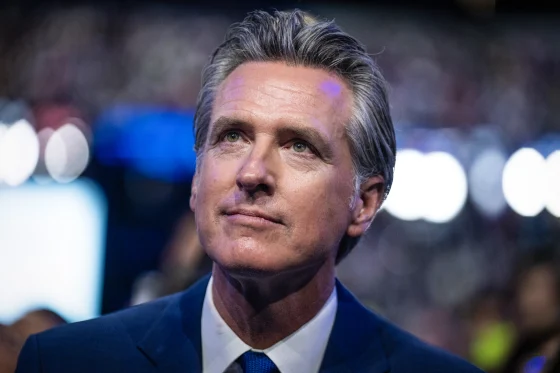
California has just passed a series of laws that Governor Gavin Newsom proudly claims will protect the integrity of elections by combating AI-generated “deepfakes” and deceptive content online. However, beneath this seemingly noble effort to safeguard democracy lies a disturbing reality: the state is inching closer to curbing free speech, humor, and even the art of meme-making. Yes, you read that correctly—your favorite political memes may soon become collateral damage in California’s latest campaign to “protect democracy.”
The internet has long been a space where people vent their political frustrations through humor, satire, and memes. From clever Photoshops of politicians to viral videos mocking campaign ads, humor has been central to how we cope with the absurdities of modern politics. But now, California’s new laws threaten to stifle this, with Assembly Bill 2655 leading the charge. The bill requires large online platforms to remove or label any deceptive or digitally altered content related to elections. While preventing voters from being misled by hyper-realistic deepfakes sounds reasonable on the surface, the deeper implications of this law are far more troubling.
The key question is: who decides what content is “deceptively altered”? The legislation leaves this decision in the hands of the platforms themselves, entities that have already shown a strong bias in moderating content. Given the uneven history of content moderation on major social media platforms, it’s reasonable to fear that platforms will err on the side of censorship to avoid potential lawsuits. How many memes or satirical posts will be caught up in the hysteria over “misleading” content?
In the digital age, where memes and content are constantly shared, reshaped, and repurposed, drawing a clear line between harmful deception and harmless satire is nearly impossible. What happens when a meme that playfully pokes fun at a politician is flagged as “deceptively altered”? Will the internet’s unique ability to generate viral political humor be squashed under the guise of protecting elections?
Another concerning aspect is Assembly Bill 2355, which mandates that AI-altered election ads must include a disclosure that the content has been modified. While this may seem like a fair approach to transparency, it risks creating confusion about what qualifies as “AI-altered” content. Meme culture thrives on altering images, videos, and audio for entertainment or criticism, not to deceive. This law blurs the line between clever satire and what lawmakers might deem malicious manipulation. The real danger lies in how this could be used to suppress legitimate political commentary.
One of the most significant threats posed by these laws is their chilling effect on humor and satire. Political jokes and memes often serve as tools for social commentary and political expression. By forcing creators to slap disclaimers on their work—simply because they used AI or digital editing—California’s new laws threaten to dampen the creativity that makes the internet such a vibrant space for political discourse. Imagine watching a meme mocking a politician, only to have a giant “This image has been altered” tag ruin the joke. The punchline is lost, and free expression is stifled.

CLICK HERE to buy your copy of Before the Badge by retired cop Dominick Izzo
While the focus may currently be on deepfakes, this is only the tip of the iceberg. California has a long history of attempting to regulate speech under the guise of public protection. These new laws, although ostensibly aimed at election-related content, represent a broader trend toward government control over the digital narrative. Satire, dissent, and humor are all at risk of falling victim to an increasingly authoritarian approach to online discourse.
It’s easy to see how these laws could be weaponized in the heated atmosphere of the 2024 election. Both political parties will undoubtedly scrutinize every meme, video, and piece of online content as Election Day approaches. By granting politicians and online platforms the power to censor or label content as “misleading,” California may have just handed a powerful tool to anyone looking to silence their opposition. The lines between combating disinformation and stifling dissent are becoming dangerously blurred.
Governor Newsom may argue that these laws are designed to promote transparency and trustworthy AI, but the reality is that they carry far-reaching implications beyond deepfakes. Humor, satire, and memes are vital components of free political speech. If these new regulations are used to censor this type of expression, the result could be a chilling effect on how Americans discuss and debate political issues.
Yes, disinformation is a problem that needs addressing, but it cannot come at the expense of legitimate political discourse and free expression. The internet has always been a chaotic, often hilarious place where political frustrations are vented through humor. This kind of expression is not just entertainment; it is a form of political engagement and dialogue.
For those living in California who love making or sharing memes, this new reality is concerning. Your next politically charged joke may come with a side of government-mandated disclaimers. This is a grim day for free speech when the state decides to become the arbiter of humor. What’s next? Will they go after the beloved cat videos that have provided light-hearted distraction in these politically divisive times?
As these laws take effect, it’s clear that California’s attempts to “protect democracy” are paving the way for greater censorship, particularly of political humor. The government should not be in the business of determining what’s funny or what constitutes legitimate satire. These new regulations are a step down a dangerous path where free speech, particularly speech that challenges or mocks those in power, is increasingly under threat.
Let’s just hope the next meme you share doesn’t have a government-approved disclaimer stamped across it, killing the humor and suppressing the very freedom of expression that makes democracy vibrant.
I want to know what you think!
Send me your views, thoughts or what’s on your mind and we will feature on our newsletter or show!
Email to [email protected] OR
Leave a text, voice note or voicemail for the show on what your thoughts are at 708-982-0974
Connect with me on Spreely Social CLICK HERE to Check out Spreely Social
And don’t forget to watch us LIVE weekdays at 1p est! CLICK HERE to Watch The Rants of Izzo Show!
-Izzo