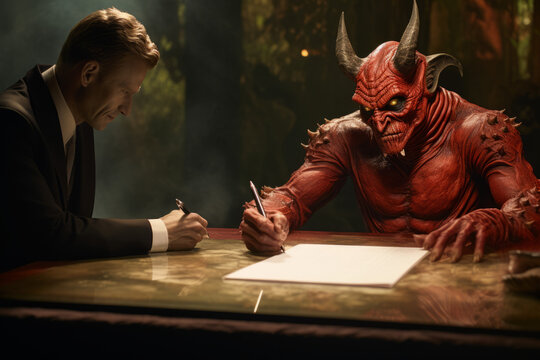
In the realm of conspiracy theories, few are as intriguing and divisive as the notion of Satan worship infiltrating the music industry. This fringe belief suggests that prominent figures within the entertainment world engage in rituals and symbolism associated with Satanism, subtly influencing the masses through their music.
Coupled with this is the concept of Hertz frequencies, proposing that certain musical tones are intentionally crafted to manipulate emotions and thoughts. While these ideas may seem far-fetched to many, they have garnered significant attention among conspiracy theorists and skeptics alike.
The roots of the Satan worship conspiracy theory can be traced back to the 1960s and 1970s, a time of cultural upheaval and experimentation in the music industry.
As rock and roll gained popularity, so too did rumors of musicians making pacts with the devil in exchange for fame and success.
Icons like Led Zeppelin and The Rolling Stones were among those accused of embedding Satanic messages in their songs, leading to widespread speculation and fear among concerned parents and religious groups.
Watch the full Rants of Izzo Show episode of satanic influence on the music industry:
CLICK HERE TO WATCH!
One of the primary arguments presented by proponents of this theory is the prevalence of occult symbolism in music videos, album covers, and live performances.
From pentagrams to inverted crosses, these symbols are believed to serve as subtle nods to Satanic influence. Additionally, certain lyrics are scrutinized for hidden messages when played backward, a phenomenon known as backmasking, purportedly revealing messages promoting Satanism or other dark themes.
Listen to “Frequencies, Vibrations, Music: Is Satan Pulling Our Strings?” on Spreaker.
Another aspect of this conspiracy theory revolves around the concept of Hertz frequencies and their alleged role in music manipulation. Proponents claim that the standard tuning frequency of A440, used in most Western music, is deliberately chosen to evoke negative emotions and lower consciousness.
They argue that reverting to alternative tuning systems, such as A432, can lead to a more harmonious and spiritually uplifting listening experience.
While the scientific validity of these claims is highly questionable, the allure of uncovering hidden truths and exposing perceived corruption continues to fuel interest in the conspiracy.
The internet has provided a platform for like-minded individuals to share their findings, further perpetuating the narrative through forums, blogs, and social media channels. This virtual echo chamber reinforces existing beliefs while attracting new adherents to the fold.
Black Activist Dr. Rashad Richey Loses Debate and Cuts to Commercial
Despite the lack of concrete evidence supporting the Satan worship conspiracy theory, its impact on popular culture cannot be denied. Countless documentaries, books, and online videos have been dedicated to exploring and dissecting the alleged connections between the music industry and occult practices.
Celebrities who embrace esoteric symbolism or express unconventional beliefs often find themselves scrutinized and labeled as agents of Satanic influence, adding fuel to the fire of speculation.
In recent years, the rise of streaming platforms and independent artists has challenged the traditional power structures within the music industry.
This decentralization has led some conspiracy theorists to speculate that the occult agenda is evolving, adapting to new mediums and methods of distribution. Whether through mainstream channels or underground networks, the alleged influence of Satanism in music persists as a recurring theme in fringe discourse.
Critics of the Satan worship conspiracy theory argue that it relies heavily on conjecture and selective interpretation of evidence. They point to Occam’s razor, the principle that the simplest explanation is usually the correct one, suggesting that the notion of a vast Satanic cabal orchestrating the music industry is implausible.
Instead, they attribute occult symbolism in music to artistic expression, shock value, or marketing tactics aimed at garnering attention.
Furthermore, the scientific basis for the Hertz frequency manipulation hypothesis has been thoroughly debunked by experts in the field of acoustics and psychoacoustics. While certain frequencies may indeed evoke emotional responses in listeners, there is no evidence to suggest a nefarious agenda behind the standard tuning system used in modern music production.
In conclusion, the conspiracy theory of Satan worship in the music industry and Hertz frequency manipulation remains a fringe belief with limited empirical support.
Despite its lack of credibility, the allure of uncovering hidden secrets and exposing perceived corruption continues to attract adherents and spark debate. Whether rooted in genuine concern or fueled by a fascination with the esoteric, this conspiracy theory serves as a testament to the enduring power of myth and speculation in the digital age.