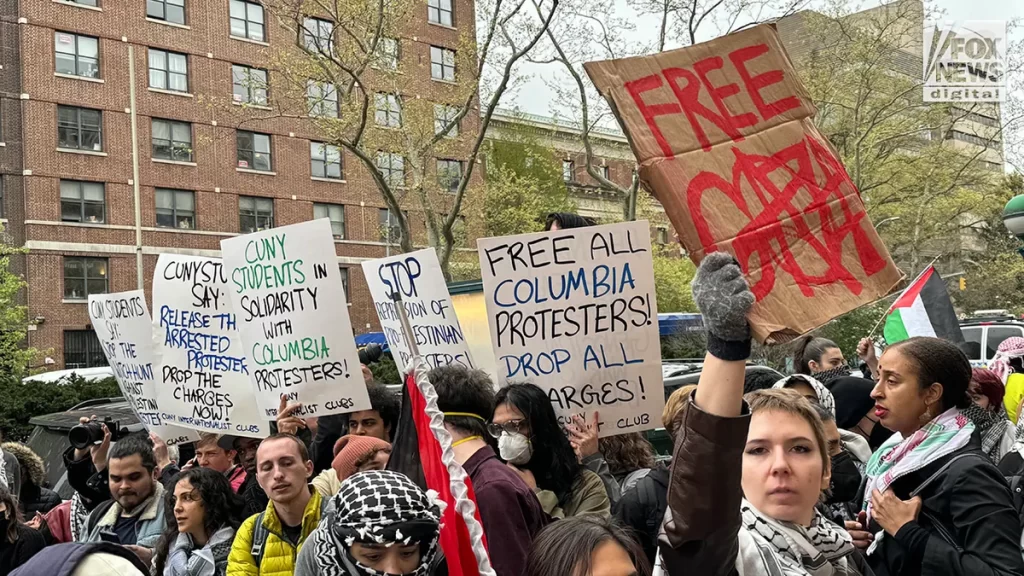
In a bid to navigate the swirling tensions surrounding the Israel-Hamas conflict, some of America’s most esteemed universities are facing a conundrum: how to balance free expression with ensuring a safe and inclusive campus environment.
Recent events have underscored the complexity of this challenge, with Columbia University canceling in-person classes, New York University witnessing the arrest of dozens of protesters, and Harvard University closing its gates to the public.

At Columbia University, over 100 pro-Palestinian demonstrators were arrested after camping out on the campus green, mirroring similar encampments that have sprung up across universities nationwide. These actions reflect a broader debate within academia about where to draw the line between allowing free expression and maintaining campus safety.

Meanwhile, at New York University, a student-led encampment swelled to hundreds of protesters, prompting police intervention due to disorderly conduct and reports of antisemitic incidents. The situation has left students divided, with pro-Palestinian activists calling for condemnations of Israel’s actions and divestment from companies supplying arms to Israel, while some Jewish students express concerns about antisemitism and their safety on campus.
American Small Businesses Episode 3: How to Become An Entrepreneur with Dave Daley
Similar tensions have manifested at Harvard University, where access to Harvard Yard was restricted, and the university suspended the Palestine Solidarity Committee, sparking accusations of stifling free speech.
The events unfolding on campuses across the nation reflect the broader fissures within society over the Israel-Palestine conflict. While universities have historically been bastions of free speech and intellectual exchange, they are now grappling with how to navigate increasingly polarized debates without compromising campus safety and inclusivity.
Shove Reparations up your A**! The Government HATES Christians
Listen to “Shove Reparations up your A**! The Government HATES Christians” on Spreaker.
In response to these challenges, university administrations are implementing various measures. Columbia University announced virtual classes to deescalate tensions, while Yale University saw the arrest of approximately 45 protesters demanding divestment from defense companies doing business with Israel. Similarly, Harvard University faced criticism for its handling of student protests and subsequent suspension of the Palestine Solidarity Committee.
The situation is not unique to Ivy League institutions. Massachusetts Institute of Technology (MIT) also saw student protests calling for a cease-fire in Gaza and condemning the university’s perceived complicity in the conflict.
As universities confront these complex issues, calls for dialogue, understanding, and empathy have become more urgent than ever. While the Israel-Palestine conflict remains deeply divisive, fostering an environment where differing perspectives can be respectfully exchanged is paramount.
Moving forward, universities must strike a delicate balance between upholding principles of free speech and ensuring the safety and well-being of all members of their communities. By fostering open dialogue, promoting mutual respect, and actively engaging with diverse viewpoints, universities can fulfill their role as spaces for rigorous intellectual exchange while fostering an inclusive and supportive environment for all students, faculty, and staff.