
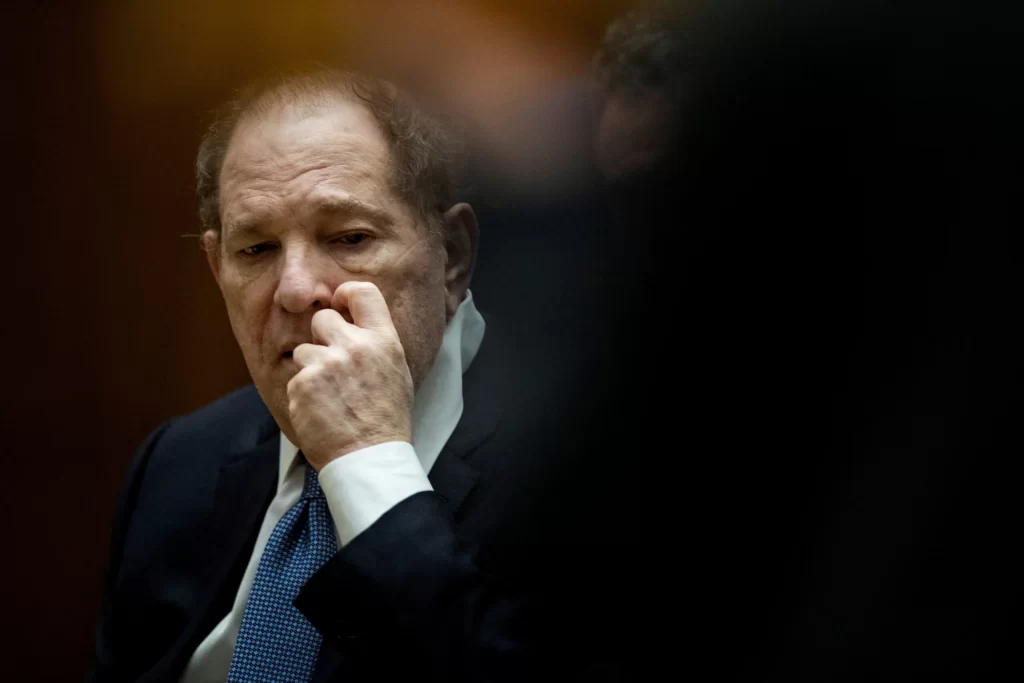
In a significant development within the #MeToo movement, New York’s highest court has overturned Harvey Weinstein’s 2020 rape conviction, citing judicial errors. The decision, issued by the state Court of Appeals on Thursday, raises questions about how cases of sexual misconduct are prosecuted and reopens a painful chapter in America’s ongoing reckoning with sexual violence by powerful figures.

Weinstein, 72, who was once a titan of Hollywood, was convicted in New York in 2020 for criminal sex acts and third-degree rape. He received a 23-year sentence for forcibly performing oral sex on a production assistant in 2006 and for raping an aspiring actress in 2013. However, the Court of Appeals found that the trial judge, James Burke, improperly allowed testimony from women who were not directly involved in the case. This, the court stated, was “an abuse of judicial discretion,” prompting the 4-3 decision to overturn Weinstein’s conviction.
Implications for Weinstein’s Imprisonment and a New Trial
Despite the overturning of his New York conviction, Weinstein will remain behind bars due to his 2022 conviction in Los Angeles for another rape case, for which he received a 16-year sentence. Nevertheless, the Manhattan district attorney’s office indicated that it intends to retry Weinstein on the New York charges, which could mean a return to court for his accusers, forcing them to relive their trauma on the witness stand.
The ruling has garnered mixed reactions. Weinstein’s lawyer, Arthur Aidala, described the decision as a “tremendous victory for every criminal defendant in the state of New York.” He argued that the original trial’s allowance of testimony regarding uncharged acts was inappropriate and potentially prejudicial.
Conversely, the Manhattan district attorney’s office declared its intent to “do everything in our power to retry this case.” Attorneys for Weinstein’s accusers criticized the ruling as a setback in the fight against sexual violence. Douglas H. Wigdor, representing eight of Weinstein’s accusers, stated, “The jury was instructed on the relevance of this testimony and overturning the verdict is tragic in that it will require the victims to endure yet another trial.”
Dissent and Continuing Impact of the #MeToo Movement
The decision to overturn Weinstein’s conviction was not unanimous. Judge Madeline Singas issued a scathing dissent, highlighting a “disturbing trend of overturning juries’ guilty verdicts in cases involving sexual violence.” She argued that the testimony from additional women provided critical context for the jury to understand Weinstein’s behavior.
What is Heaven Like? Who is the Anti christ? Revelation part 2
Listen to “What is Heaven Like? Who is the Anti christ? Revelation part 2” on Spreaker.
Debra Katz, a prominent civil rights and #MeToo attorney, shared that her clients were “feeling gutted” by the ruling. However, she noted that the cultural impact of the #MeToo movement persists, emphasizing that people’s willingness to support victims of sexual assault and violence continues to grow. Despite the setback, Katz expressed confidence that Weinstein would be convicted again in a retrial.

Boxer Ryan Garcia has Child P*rn on His Phone!?
The reversal of Weinstein’s conviction follows another high-profile #MeToo setback: the U.S. Supreme Court’s refusal to hear an appeal of a Pennsylvania court decision to overturn Bill Cosby’s sexual assault conviction. These developments have led to increased scrutiny of how courts handle cases of sexual misconduct and the challenges victims face in seeking justice.
Next Steps and the Broader Context
The Court of Appeals’ ruling came after an intermediate appeals court had upheld Weinstein’s conviction. However, doubts were raised about Judge Burke’s conduct during oral arguments, with one lower appellate court judge pointing out that Burke had allowed “incredibly prejudicial testimony” from additional witnesses. Notably, Judge Burke’s term expired at the end of 2022, and he was not reappointed, effectively ending his tenure as a judge.
Weinstein’s lawyers had sought a new trial, but only for the criminal sexual act charge, arguing that the rape charge could not be retried due to the statute of limitations. As the legal process continues, the case’s outcome will likely have far-reaching implications for the #MeToo movement and how society addresses sexual misconduct by powerful individuals.