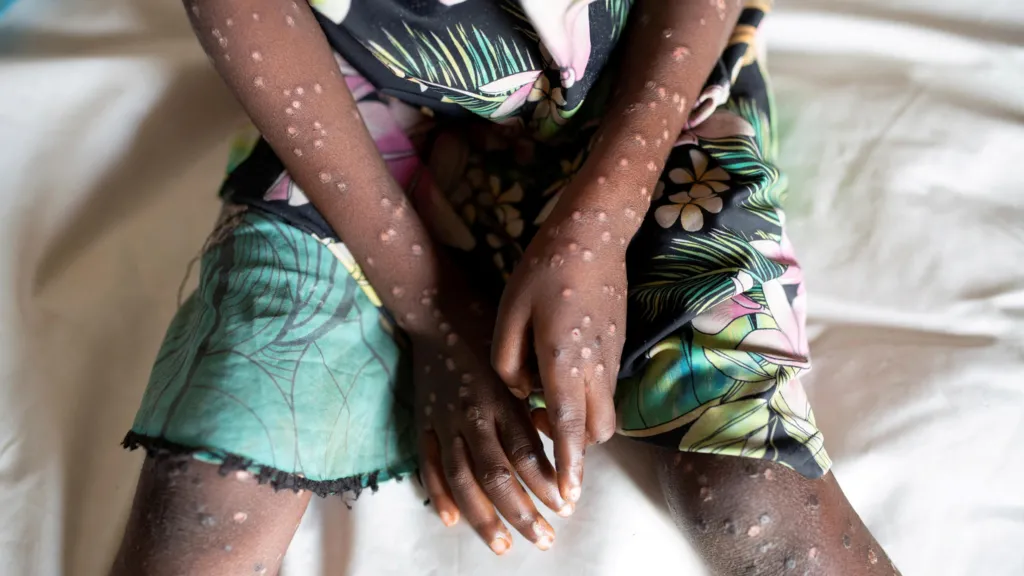
The World Health Organization (WHO) has officially declared the ongoing mpox outbreak in parts of Africa a public health emergency of international concern. The disease, previously known as monkeypox, has already claimed the lives of at least 450 individuals during an initial outbreak in the Democratic Republic of Congo (DRC) and has now spread to other regions in central and eastern Africa. The rapid spread of a new, more lethal variant of mpox has alarmed scientists and health officials, raising concerns about its potential to cause widespread devastation if not contained.
Social media “detox”? Do you need one? CLICK HERE to Watch The Rants of Izzo Show!
The outbreak began in the DRC, where the highly contagious virus quickly escalated, causing significant mortality. Mpox, which is transmitted through close physical contact, such as skin-to-skin interaction, sexual contact, or even close-range breathing, presents with flu-like symptoms and skin lesions. While the disease can be controlled with vaccines, these are typically reserved for those at high risk or individuals who have been in close contact with an infected person.
The variant currently spreading across Africa is particularly concerning due to its high fatality rate. The WHO has identified two main types of mpox: Clade 1 and Clade 2. The previous public health emergency in 2022 was attributed to the relatively mild Clade 2 strain, which spread globally but caused fewer deaths. This time, however, it is the more deadly Clade 1 strain—historically associated with a fatality rate of up to 10%—that is surging.
In September of the previous year, a mutation in the virus gave rise to an offshoot called Clade 1b, which has since been described by scientists as “the most dangerous yet.” This new variant has spread rapidly across the DRC, with over 13,700 cases and at least 450 deaths reported since the beginning of the year. The virus has also been detected in several other African countries, including Burundi, the Central African Republic, Kenya, and Rwanda, further escalating the public health threat.
Listen to “Why Does He Always Want Sex!” on Spreaker.
WHO Director-General Tedros Adhanom Ghebreyesus expressed grave concern over the potential for further spread both within Africa and internationally. “A coordinated international response is essential to stop this outbreak and save lives,” he urged, emphasizing the need for immediate global action.
The declaration of a public health emergency is a crucial step that signals the gravity of the situation and is expected to accelerate research, funding, and the implementation of international public health measures. Dr. Josie Golding of the Wellcome Trust called the WHO’s declaration a “strong signal” to the global community, while Dr. Boghuma Titanji of Emory University highlighted that the move underscores the seriousness of the crisis.
Despite the urgency, many unknowns remain, particularly with the emergence of the new Clade 1b variant. Prof. Trudie Lang, director of the Global Health Network at the University of Oxford, stressed the importance and timeliness of the WHO’s declaration but also noted that the new strain introduces challenges that need to be quickly addressed.
The current outbreak has drawn parallels to the 2022 mpox public health emergency, where the milder Clade 2 strain spread to nearly 100 countries, including in Europe and Asia. During that outbreak, more than 87,000 cases and 140 deaths were reported. The virus primarily affected men who have sex with men, a population that was targeted with vaccination efforts to control the spread.
However, the current situation with Clade 1 presents a far more severe challenge. On Tuesday, the Africa Centres for Disease Control and Prevention also declared a public health emergency in response to the outbreak. Jean Kaseya, head of the organization, warned that without immediate and aggressive measures, the situation could spiral out of control. “We must be proactive and aggressive in our efforts to contain and eliminate this threat,” Kaseya stated.
The international community is now facing a critical juncture. The WHO’s declaration is expected to mobilize global resources and focus attention on controlling the outbreak before it spreads further. However, the challenges are significant, particularly in regions with limited healthcare infrastructure and resources. The rapid spread of the more lethal Clade 1 variant highlights the need for swift and coordinated action to prevent a larger catastrophe.
Time to ask yourself if this is real or conveniently timed for the election?
Have something you want to share with us? Email [email protected] and send us any story that you want us to cover on the show!
-Dominick Izzo