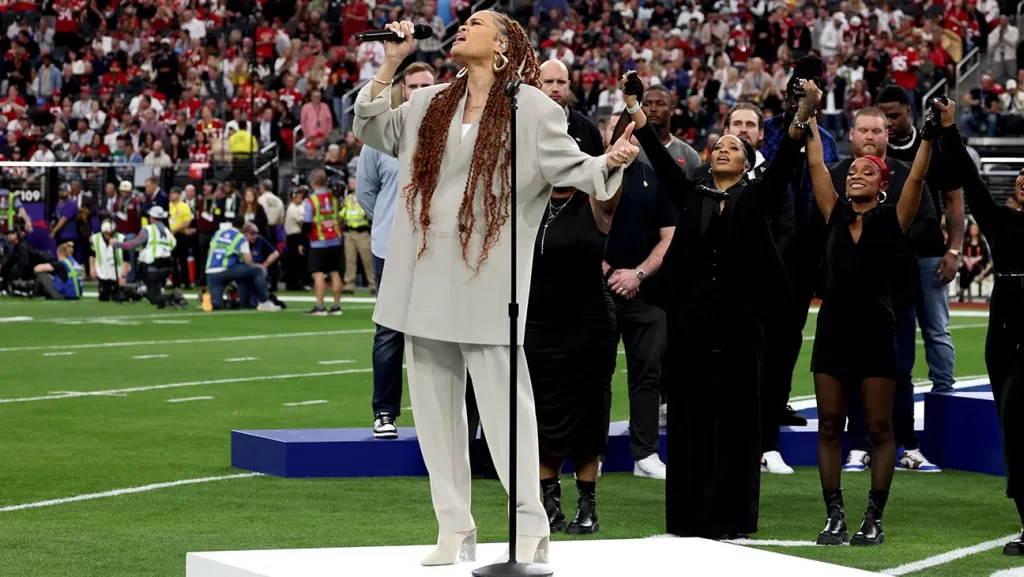
In recent years, a contentious debate has emerged surrounding the idea of introducing a dual national anthem in the United States, with proponents advocating for the inclusion of “Lift Every Voice and Sing” alongside the traditional “Star-Spangled Banner.” However, this proposal is not without its critics, who argue that such a move is purely political, divisive, and unnecessary for the unity of the nation.
Black Activist Dr. Rashad Richey Loses Debate and Cuts to Commercial
The Black National Anthem, as it is often called, holds historical significance within the African American community. Composed by James Weldon Johnson and his brother John Rosamond Johnson in 1900, “Lift Every Voice and Sing” initially served as a rallying cry for Black Americans during the Jim Crow era. It symbolized resilience, hope, and the ongoing struggle for equality in the face of systemic oppression.
While acknowledging the song’s historical importance, detractors of the dual anthem proposal argue that introducing a separate national anthem for a specific racial or ethnic group undermines the concept of national unity. America’s strength lies in its diversity, but unity is paramount. By promoting a separate anthem for a particular demographic, we risk fragmenting our national identity rather than fostering inclusivity.

Moreover, critics contend that the push for a dual national anthem is a politically motivated maneuver that seeks to capitalize on racial tensions for partisan gain. In an era marked by heightened political polarization, introducing such a divisive symbol only serves to exacerbate existing divides rather than bridge them.
Proponents of the dual anthem argue that “Lift Every Voice and Sing” represents a celebration of diversity and inclusion. However, the notion of inclusivity should not be conflated with the introduction of separate symbols that reinforce divisions along racial lines. True inclusivity means embracing our shared identity as Americans, regardless of race or ethnicity.
Listen to “Racist White Guilt is Destroying America” on Spreaker.
Furthermore, opponents of the dual anthem proposal argue that it sets a dangerous precedent. If we begin accommodating demands for separate national symbols based on race or ethnicity, where do we draw the line? Will other groups also demand their own anthems, further splintering our national cohesion?
Critics also question the practicality of implementing a dual anthem system. The “Star-Spangled Banner” has served as the national anthem of the United States since 1931, ingrained in the fabric of American culture and tradition. Introducing a new anthem alongside it would not only be logistically challenging but could also dilute the significance of both songs.
Connect with us on Spreely Social and Express Your First Amendment Right!
Click here to Join Spreely Social!
Some argue that “Lift Every Voice and Sing” should be recognized as a national hymn rather than a separate anthem. While acknowledging its cultural significance, they assert that relegating it to a secondary status does not diminish its importance but rather preserves the unity of our national symbols.
Moreover, opponents of the dual anthem proposal argue that it detracts from more pressing issues facing minority communities. Instead of symbolic gestures, they advocate for tangible actions and policies that address systemic inequities in areas such as education, healthcare, and criminal justice.
Critics also point out the potential unintended consequences of adopting a dual anthem. Rather than fostering understanding and unity, it could inadvertently reinforce stereotypes and perpetuate divisions by emphasizing differences rather than commonalities.
Furthermore, opponents of the dual anthem proposal question the motives behind its proponents. Are they genuinely seeking to promote inclusivity, or are they exploiting identity politics for personal or political gain? Skepticism abounds regarding the sincerity of those advocating for a separate national anthem.
While “Lift Every Voice and Sing” holds significant cultural and historical importance, the push for its adoption as a dual national anthem is fraught with political, practical, and symbolic challenges.
Rather than embracing divisive symbols that risk further fragmenting our nation, we should focus on fostering unity and addressing systemic inequities through meaningful dialogue and action. America’s strength lies in its diversity, but our unity as a nation must remain paramount.