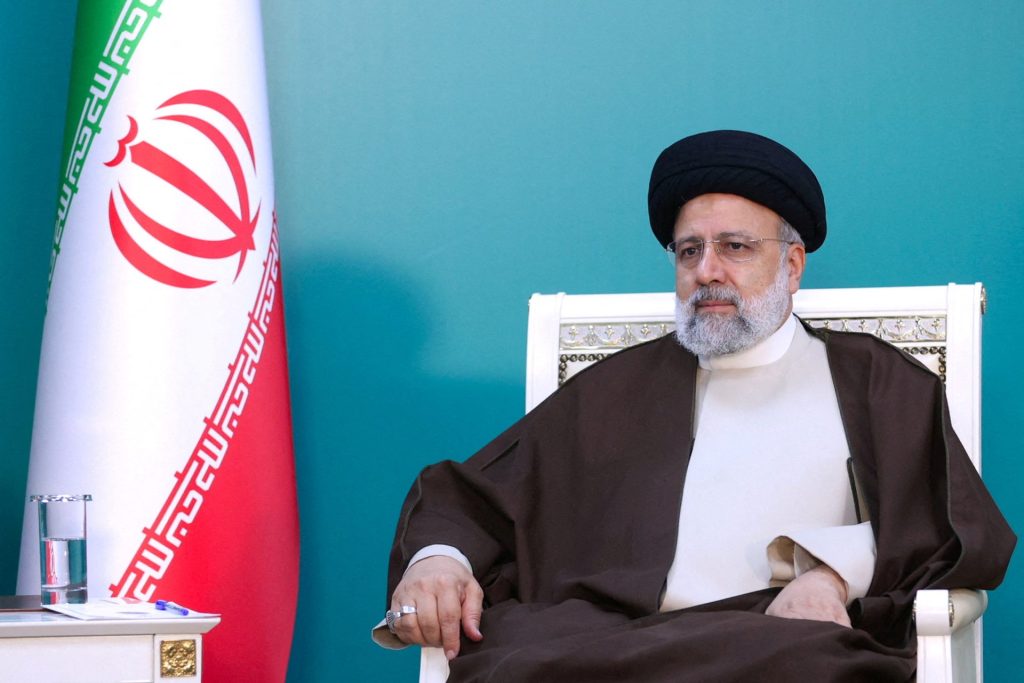
The deaths of President Ebrahim Raisi and Foreign Minister Hossein Amir Abdollahian in a tragic helicopter crash have plunged Iran into a leadership crisis at a time of significant international and domestic challenges. Despite the loss of these two influential figures, analysts and regional officials anticipate that Iran’s foreign and domestic policies will remain largely unchanged.

The accident occurred on Sunday when a helicopter carrying Mr. Raisi, 63, and Mr. Abdollahian crashed due to a “technical failure,” as reported by Iranian state news media. The officials were traveling from Iran’s border with Azerbaijan after inaugurating a dam project. The helicopter went down in a mountainous region near the city of Jolfa. Rescue teams faced difficult conditions, scouring dense forests through rain and fog for hours before locating the crash site. Tragically, there were no survivors.
In the wake of this calamity, Iranian authorities have endeavored to maintain a sense of order and continuity. Supreme Leader Ayatollah Ali Khamenei assured the nation that there would be “no disruption” to the functioning of the government. He designated the first vice president, Mohammad Mokhber, as the acting president and instructed him to organize presidential elections within 50 days.
Queer Planet: Animals are Gay too According to Peacock
The death of Mr. Raisi, a staunch conservative who was considered a potential successor to Mr. Khamenei, comes at a particularly volatile time. Just weeks ago, Iran narrowly avoided open conflict with Israel and the United States. The clandestine conflict with Israel escalated dramatically with direct strikes last month, adding to the growing international tensions. Moreover, the status of Iran’s nuclear program remains a pressing concern, with the country having enriched nuclear fuel to levels just short of those required to produce nuclear weapons.
Ebrahim Raisi, a hard-line cleric who rose to prominence during Iran’s Islamic revolution, was the second most powerful person in Iran’s political hierarchy after Ayatollah Khamenei. His passing might pave the way for Mr. Khamenei’s son, Mojtaba, to step into a more prominent role, potentially even as the next supreme leader.
Listen to “Become WAR. Ep – 31 Are Posturing and Stoicism Killing Masculinity?” on Spreaker.
Raisi’s presidency, which began in 2021, was marked by the consolidation of power and the marginalization of reformist factions within the country. He continued to extend Iran’s influence across the Middle East, supporting proxy groups that conducted operations against Israel and the United States. Domestically, he oversaw a harsh crackdown on protesters, many of whom were women and young people calling for greater freedoms and reforms.
The shadow war between Iran and Israel intensified notably after Hamas attacked Israel on October 7, igniting the conflict in Gaza and a series of retaliatory strikes across the region. Tensions further escalated in April when Israel conducted airstrikes on a building within the Iranian Embassy complex in Syria. In response, Iran launched a direct attack on Israel, sending over 300 drones and missiles, the majority of which were intercepted.

CLICK HERE to Watch The Rants of Izzo Show!
Iran is also grappling with significant internal discontent. Widespread frustration with clerical rule, economic hardship exacerbated by corruption and international sanctions, and environmental challenges have fueled public anger. The past two years have seen major domestic upheaval, with the Iranian currency plummeting to a record low, severe water shortages worsened by climate change, and the deadliest terrorist attack since the 1979 Islamic Revolution.
Despite the current turmoil, the Supreme Leader and the ruling establishment seem determined to project stability and control. The immediate appointment of Mohammad Mokhber as acting president and the call for quick elections are moves aimed at reassuring the public and the international community that Iran’s governance will proceed without significant interruption.

CLICK HERE to join the exclusive Iron Sharpening Iron Men’s Group
The deaths of Raisi and Abdollahian have undoubtedly created a vacuum in Iran’s leadership, but the country’s political structure is designed to withstand such shocks. The ongoing commitment to established policies and strategies, particularly concerning regional influence and nuclear ambitions, suggests that Iran will continue to navigate its complex web of international relations and domestic challenges much as it has in recent years. The coming weeks and months will be critical in determining how Iran manages this transition and whether it can maintain the semblance of stability it seeks to project.