
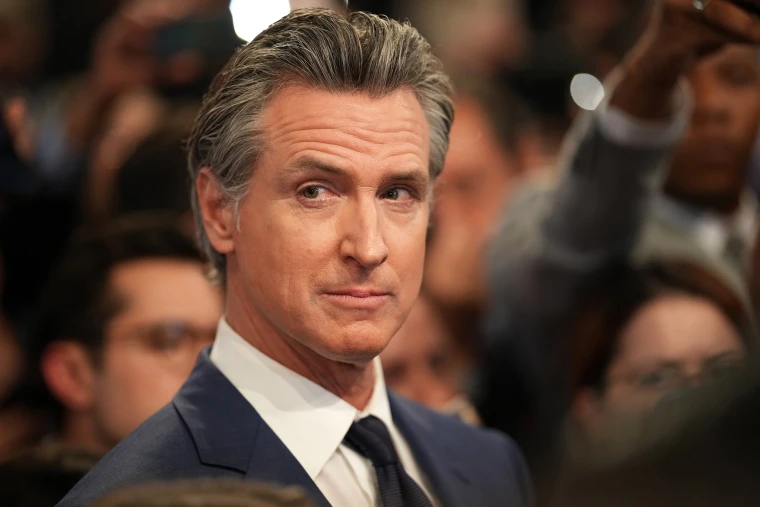
Newsom’s tenure as governor has been marked by hypocrisy, mismanagement, and policies that have driven California into decline. His handling of the pandemic, his open-border stance, and the deteriorating conditions in California’s cities raise serious questions about his qualifications to lead the nation.
Gavin Newsom’s management of the COVID-19 pandemic is a textbook example of political hypocrisy and ineffectiveness. Newsom imposed some of the strictest lockdown measures in the country, severely impacting small businesses and the daily lives of Californians.
Yet, while Californians were mandated to stay home, close their businesses, and adhere to stringent mask policies, Newsom blatantly flouted his own rules. In November 2020, he was infamously caught dining maskless at the French Laundry, an exclusive Napa Valley restaurant, during a time when he had banned indoor dining across much of the state. This “rules for thee, but not for me” approach exposed his disregard for the hardships faced by everyday citizens due to his draconian policies.
Newsom’s hypocrisy during the pandemic isn’t just a matter of poor optics; it reflects a deeper issue of leadership and accountability. His actions undermined public trust in government directives and showcased a glaring double standard. How can a leader who does not follow his own mandates expect to effectively lead a nation through crises?
Furthermore, Newsom’s open-border policy is another area of concern. California has long been a sanctuary state under his leadership, which has led to an influx of illegal immigration. This policy not only strains the state’s resources but also poses security risks.
According to a report by the Public Policy Institute of California, the state spends billions annually on services for illegal immigrants, including healthcare and education. While compassionate immigration policies are necessary, they must be balanced with security and economic realities. Newsom’s open-border stance shows a lack of such balance, prioritizing ideology over practical governance.
California’s cities, once thriving hubs of innovation and culture, are now facing unprecedented crises. The most visible sign of this decline is the homelessness epidemic. San Francisco, Los Angeles, and other major cities have become infamous for their tent cities and people defecating in the streets.
The Los Angeles Homeless Services Authority reported that homelessness increased by 16% in 2020, reflecting the failure of Newsom’s policies to address the root causes of the crisis. Instead of providing effective solutions, Newsom’s approach has been to throw money at the problem without accountability, leading to wasted resources and no significant improvement.
Have we really been told the truth about history?
The public health implications of these conditions are dire. The presence of human waste in public spaces is not just an eyesore; it poses serious health risks, including the spread of diseases like hepatitis A. Newsom’s inability to clean up the streets and provide adequate housing solutions speaks volumes about his leadership capabilities. If he cannot manage California’s major cities, how can he be expected to run an entire country?
In addition to these issues, Newsom’s economic policies have driven businesses and residents out of California. The state’s high taxes, stringent regulations, and costly living conditions have prompted a mass exodus. According to the California Policy Center, the state lost 135,600 more people to other states than it gained in 2020, the third straight year of net outmigration. Major corporations like Oracle and Tesla have moved their headquarters out of California, citing the state’s unfriendly business environment. This exodus not only reflects poorly on Newsom’s governance but also raises concerns about his ability to manage the national economy.
Bullies with Badges: Why Tough Guy Cops Ruin Law Enforcement
Listen to “Bullies with Badges: Why Tough Guy Cops Ruin Law Enforcement” on Spreaker.
California’s fiscal policies under Newsom have been equally disastrous. The state’s budget, while ostensibly balanced, relies heavily on volatile income from capital gains taxes. This makes California’s finances highly susceptible to economic downturns, leading to potential deficits and financial instability. Newsom’s approach to fiscal management, characterized by high spending and reliance on unpredictable revenue streams, is a risky strategy that could have severe national implications if implemented at the federal level.
In conclusion, Gavin Newsom’s tenure as governor of California should serve as a cautionary tale rather than a qualification for higher office. His mishandling of the pandemic, open-border policies, and inability to address the homelessness crisis in California’s cities raise serious doubts about his capacity to lead the nation. As conservatives, we must scrutinize his record and question whether a leader who has failed on so many fronts at the state level is fit to hold the highest office in the land. The future of our nation is at stake, and we cannot afford to ignore the clear warning signs from Newsom’s governance in California.