
Crews conducting a search for a missing submersible, which had five people aboard, are closely monitoring the craft’s diminishing oxygen supply as they navigate challenging and secluded waters with low visibility.
To aid in the search for the 21-foot vessel, the Coast Guard and the Royal Canadian Air Force are deploying additional aircraft and vessels. The submersible, which began its descent on Sunday morning, has only four days of emergency capability remaining.
After extensively scouring an area the size of Connecticut on the ocean’s surface, searchers are now focusing their efforts below sea level. Rear Admiral John Mauger of the US Coast Guard District 1 confirmed the deployment of underwater search capabilities to locate the submersible.
The search zone spans a remote area approximately 900 miles east of Cape Cod, Massachusetts, and reaches a depth of 13,000 feet. Crews are contending with foggy conditions and waves measuring 3 to 6 feet. Despite the challenges, all available assets are being deployed to locate the submersible and rescue the individuals on board, as stated in a news briefing by Mauger.
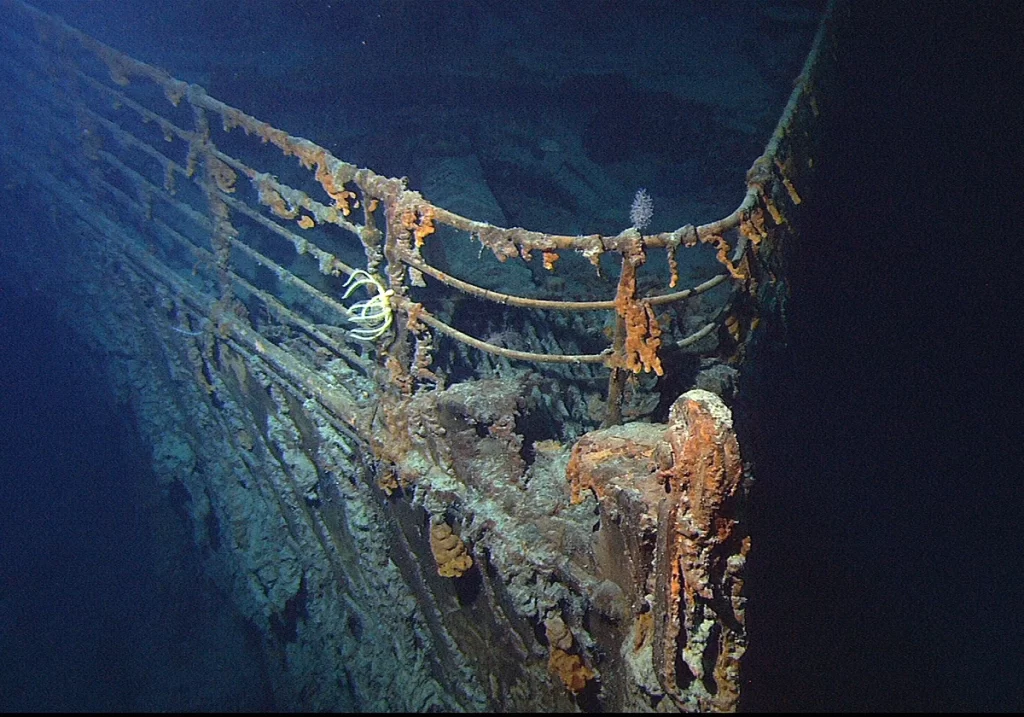
The submersible, about the size of a minivan, was carrying one pilot and four “mission specialists” when it lost contact with its mother ship during its descent to explore the Titanic wreckage.
According to Mauger, the vessel has between 70 and 96 hours of life support. Search efforts involve using sonar buoys and ship sonar to detect any sounds in the water column. The Canadian Armed Forces has also dispatched an aircraft to support the search.
OceanGate Expeditions, the group behind the Titanic expedition, is actively involved in the search and is exploring all options to ensure the safe return of the crew. The Canadian research vessel Polar Prince, which transported the submersible to the wreckage site, is assisting in the search and rescue operations.
Former US Navy diver Captain Bobbie Scholley likened search and rescue operations at sea to finding a needle in a haystack. The identities of the five people on board have not been released by the US Coast Guard, as efforts are underway to inform their families.
The submersible requires a mother ship for launch and has limited power reserves compared to a submarine. Communication between the submersible and the surface occurs via text messages exchanged through an ultra-short baseline acoustic system.
OceanGate Expeditions offers trips to the Titanic’s wreckage, with the vessel “Titan” serving as a submersible made of carbon fiber and titanium. The company’s expeditions involve missions lasting eight days, departing from and returning to St. John’s, Newfoundland.
As the search and rescue mission continues, the global community of undersea explorers, including French diver Paul-Henri Nargeolet, is anxiously awaiting updates. The families of Shahzada Dawood and Sulaiman Dawood from Pakistan, who embarked on a journey to the Titanic remnants, expressed concern and hope for their loved ones’ safe return.
The search operation is a collaborative effort involving multiple agencies, and the focus remains on locating the submersible. Once found, additional measures will be taken to rescue the crew with the assistance of partners such as the US Navy, Canadian Armed Forces, and private industry.