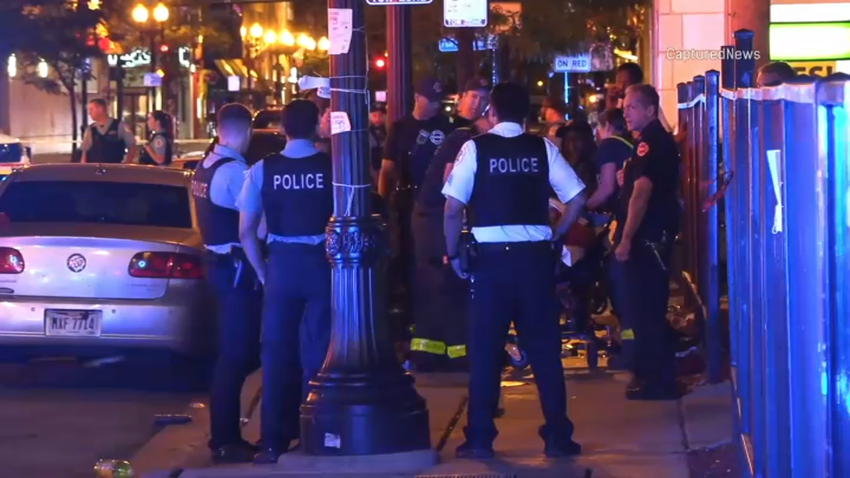
Chicago’s ongoing battle with violent crime, particularly gun violence, has become a persistent crisis, with 2024 continuing the grim trend of increasing homicides. As highlighted by statistics on HeyJackass.com, the city has already witnessed 430 homicides this year, with 379 victims of gun violence. The majority of these deaths are concentrated in Chicago’s South and West Side neighborhoods, areas that bear a disproportionate share of the city’s violence. Despite concerted efforts by law enforcement, these regions remain deeply affected by both individual and mass shootings, as seen over Labor Day weekend when multiple mass shootings took place, further adding to Chicago’s already tragic homicide toll.

Get your copy of Before the Badge: Everything You Need to Know Before You Become a Cop today! CLICK HERE to get your copy!
This epidemic of gun violence has long plagued Chicago, with seemingly no end in sight. In neighborhoods where poverty, unemployment, and lack of opportunities prevail, violence is often the tragic result. The statistics are staggering: 93% of the city’s homicides occur in these neighborhoods, underscoring the deep-rooted socio-economic issues that fuel the bloodshed. The cycle of crime and violence thrives in these communities, making it difficult for residents to break free from its grip. Fear, trauma, and loss become a part of daily life.
City leaders have made numerous attempts over the years to tackle the rising crime rates, often through increased policing, community outreach programs, and stricter gun laws. However, the effectiveness of these strategies remains questionable as the numbers continue to paint a bleak picture. One of the main hurdles is the sheer volume of illegal guns circulating within the city. Stricter gun laws alone do not address the flow of illegal weapons, which enter Chicago from other states where gun laws are far more lenient. This disparity in legislation between states makes it easier for firearms to find their way into the hands of individuals with criminal intent.
Another challenge lies in the relationship between the police and the communities they serve. Chicago, like many other major U.S. cities, has faced increasing tensions between law enforcement and the public. Incidents of police misconduct, allegations of racial profiling, and the perceived failure of authorities to protect residents have led to deep mistrust. This lack of cooperation between the community and law enforcement creates an environment in which crimes go unsolved, as witnesses and victims may be too afraid or skeptical to cooperate with investigations.
In neighborhoods like Englewood, Austin, and Garfield Park, where many of these shootings occur, the social fabric has been deeply frayed by decades of disinvestment and neglect. The prevalence of gang activity further exacerbates the problem. Gangs often provide a sense of belonging and protection for young people who feel abandoned by society. Tragically, this often leads to a cycle of violence as gangs fight over territory, with innocent residents caught in the crossfire.
During high-profile weekends, such as the recent Labor Day weekend, the violence spikes even further. Holidays, weekends, and warm weather tend to coincide with increases in shootings and homicides, a trend that city officials brace for each year. Despite additional patrols and interventions during these periods, the cycle of violence seems almost predictable. Over one holiday weekend, multiple mass shootings added to the city’s already harrowing statistics, underscoring the challenge of curbing violence even with heightened police presence.
It’s not just gang-related violence that accounts for the bloodshed. Domestic disputes, personal altercations, and random acts of violence contribute to the growing death toll. Often, these incidents escalate quickly when firearms are involved, turning what could have been non-lethal confrontations into deadly ones. The easy access to guns magnifies the danger, leaving victims with little chance of survival when tensions boil over.
The human cost of this violence is immense. Families are torn apart, children grow up without parents, and communities are left to grapple with the trauma of constant loss. The psychological toll on residents in these high-crime neighborhoods is profound. Many live in a state of hypervigilance, unsure if they or a loved one will be the next victim. The trauma of living in such conditions can have long-lasting effects, especially on children who grow up witnessing or experiencing violence firsthand.
Listen to “We have to keep talking some uncomfortable historic truths” on Spreaker.
Efforts to address these issues at the root—such as investing in education, job creation, and mental health services—are critical to breaking the cycle of violence. While short-term solutions like increased policing can help to a degree, they do not address the underlying causes of crime. Until the socio-economic factors that contribute to the violence are tackled head-on, it is unlikely that the city will see a meaningful reduction in crime rates.
Chicago’s gun violence epidemic is a complex issue, one that requires a multifaceted approach. The statistics presented by HeyJackass.com provide a stark reminder of the human cost of this violence, but they are more than just numbers. Behind each statistic is a life lost, a family grieving, and a community struggling to cope. As the year progresses, the question remains: how long will this cycle of violence continue, and what will it take for Chicago to finally break free from its deadly grip?
I want to know what you think!
Send me your views, thoughts or what’s on your mind and we will feature on our newsletter or show!
Email to [email protected] OR
Leave a text, voice note or voicemail for the show on what your thoughts are at 708-982-0974
Connect with me on Spreely Social CLICK HERE to Check out Spreely Social
-Izzo