
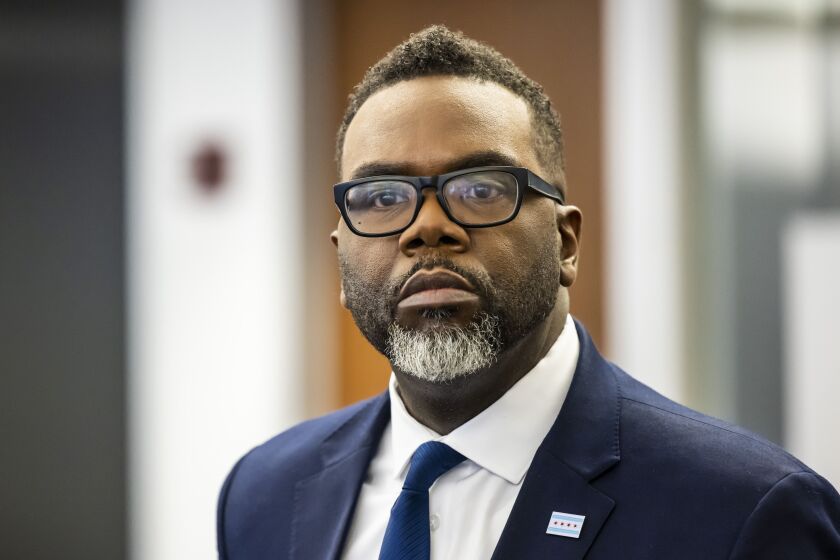
In a move that has ignited fierce controversy, Chicago’s Mayor Brandon Johnson recently signed an executive order to establish a reparations commission. This commission is intended to address historical racial injustices faced by descendants of slaves, but this initiative is not only misguided, it’s an outrage.
Firstly, let’s be clear: the idea of reparations is fundamentally flawed and unjust. It operates on the absurd assumption that today’s taxpayers, who had absolutely nothing to do with the atrocities of slavery, should bear financial responsibility for the actions of individuals who died generations ago.
This is a gross misapplication of justice that undermines the principle of individual responsibility. Why should people who played no part in these historical injustices be forced to pay for them? It’s outrageous and economically nonsensical.
Join the Chat! CLICK HERE NOW!
Moreover, the implementation of such a reparations program is riddled with logistical nightmares. Determining who qualifies as a descendant of slaves, and establishing the criteria for eligibility, is a bureaucratic disaster waiting to happen.
This opens the door to rampant fraud and abuse, not to mention the massive administrative costs that would siphon resources away from critical services like education, healthcare, and infrastructure. Chicago is already struggling financially, and this additional burden could push the city closer to economic ruin.
Let’s talk about the economic ramifications. Reparations would likely lead to increased taxes or the diversion of funds from essential services, placing an even greater strain on a city already grappling with budget issues.
This could drive businesses and investments away, stifling economic growth and ultimately harming the communities that Johnson claims to support. Instead of fostering empowerment and self-reliance, reparations risk creating a culture of dependency and entitlement.
What’s even more infuriating is Mayor Johnson’s refusal to acknowledge the rampant violence in the black community. Rather than addressing the need for stronger law enforcement and community support to combat crime, he simplistically attributes the violence to “systemic racism.”
This is a gross oversimplification that ignores the complex socio-economic factors at play. By blaming racism for every issue, Johnson diverts attention from the real problems and does a disservice to the victims of violence in these communities.
It’s an insult to suggest that all these problems boil down to racism, without holding individuals accountable for their actions or addressing the immediate need for safety and security.
Queer Planet: Animals are Gay too According to Peacock
Johnson’s approach is a classic example of the left’s refusal to deal with uncomfortable truths. By focusing solely on racism, he avoids tackling the root causes of crime and violence.
Effective solutions require acknowledging the multifaceted nature of these issues, including the need for better education, job opportunities, and robust community support structures. But instead, Johnson is content to play the race card, which does nothing to solve the underlying problems and only perpetuates a cycle of blame and victimhood.
Reparations also risk deepening racial divisions rather than healing them. The narrative of collective guilt and compensation fosters resentment and animosity between different racial and ethnic groups.
This is the last thing we need in a society that should be striving for unity and cohesion. Social harmony is built on the principles of equality and mutual respect, not on divisive policies that pit one group against another.
Critics rightly argue that reparations divert attention from more effective measures that could help marginalized communities.
Policies aimed at improving education, increasing access to affordable housing, and fostering economic opportunities are far more beneficial and inclusive. These initiatives can uplift all citizens, regardless of race, and promote genuine equality and upward mobility.
Listen to “Bullies with Badges: Why Tough Guy Cops Ruin Law Enforcement” on Spreaker.
Additionally, addressing historical injustices through education and remembrance, rather than financial compensation, is a more appropriate approach. Teaching future generations about the horrors of slavery and segregation fosters understanding and empathy without imposing financial burdens on those who had no part in these injustices. It’s about learning from the past to build a better future, not being shackled by it.
In conclusion, Mayor Brandon Johnson’s executive order to establish a reparations commission is a misguided and deeply flawed initiative.
It risks fostering division, resentment, and dependency rather than promoting unity, empowerment, and progress. Instead of focusing on reparations, efforts should be directed towards policies that create opportunities for all citizens, addressing the root causes of racial disparities and ensuring that everyone has a fair chance to succeed based on their merit and hard work. This approach would build a more just and equitable society without the divisive implications of reparations.