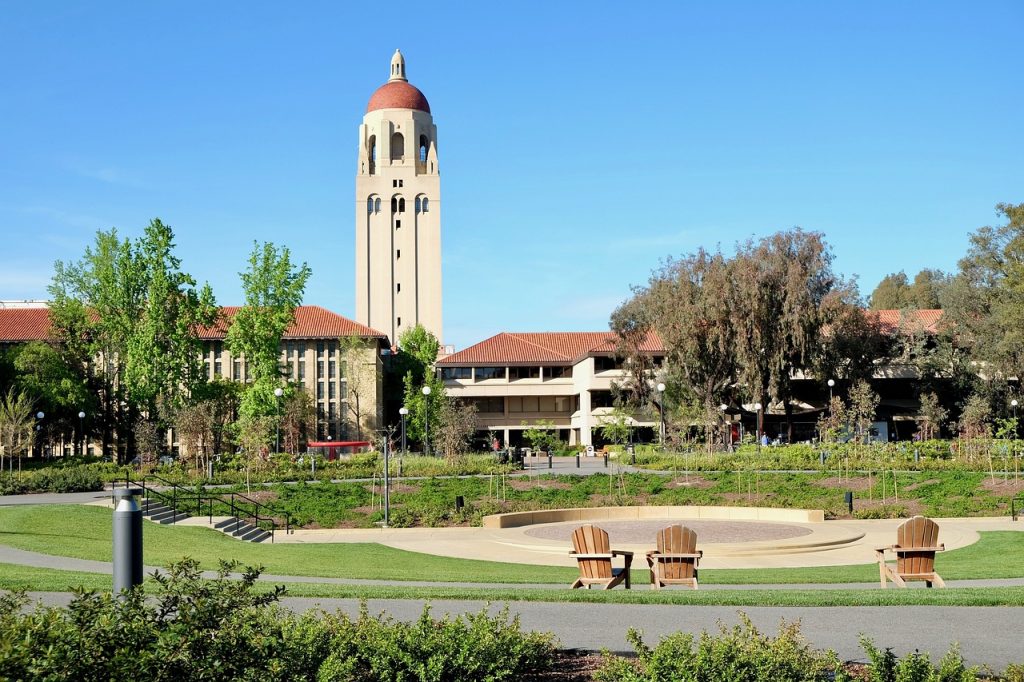
Stanford University recently released a guide encouraging students to avoid using several terms because apparently, they’re too “offensive.”
One of these “offensive” terms is the word “American”. Yep, you read that right. It’s offensive due to its alleged “exclusionary” and “insensitive” implications. This guide has been met with a strong backlash, with many arguing that this is a direct violation of free speech and an attempt to censor certain viewpoints.
The guide states that the term “American” can be used to refer to the United States and its citizens, but also carries a sense of “superiority” and “exclusion”. It then encourages students to use “more precise language,” such as “U.S. citizen” or “person from the U.S.” instead.
This move by Stanford has been met with strong criticism, with many arguing that this is an unnecessary and dangerous attempt to censor certain viewpoints. After all, the term “American” is not only an accurate way to refer to a person from the United States, but also carries a sense of pride and patriotism. To suggest that it is inappropriate to use this term is an affront to the values of freedom and liberty that this country was founded on.
Take a look at some of the words on the list that the wokies decided was “offensive”:
Original: walk-in
Swap: drop-in, open office
Reason: ‘Ableist language that trivializes the experiences of people living with disabilities’
Original: grandfather
Swap: legacy
Reason: ‘This term has its roots in the “grandfather clause” adopted by Southern states to deny voting rights to Blacks’
Original: guru
Swap: expert, subject matter expert (SME), primary, leader, teacher, guide
Reason: ‘In the Buddhist and Hindu traditions, the word is a sign of respect. Using it casually negates its original value’
Original: brave
Swap: none/do not use
Reason: ‘This term perpetuates the stereotype of the “noble courageous savage,” equating the Indigenous male as being less than a man’
Original: man hours
Swap: person hours, effort hours, labor time
Reason: ‘This term reinforces male-dominated language’
Original: American
Swap: US Citizen
Reason: ‘This term often refers to people from the United States only, thereby insinuating that the US is the most important country in the Americas (which is actually made up of 42 countries)’
Original: whitespace
Swap: empty space
Reason: ‘Assigns value connotations based on color (white = good), an act which is subconsciously racialized’
Original: proѕtitute
Swap: person who engages in ѕ-x work
Reason: ‘Using person-first language helps to not define people by just one of their characteristics’
Original: kill(ing) two birds with one stone
Swap: accomplish(ing) two things at once
Reason: ‘This expression normalizes violence against animals’
Original: trigger warning
Swap: content note
Reason: ‘The phrase can cause stress about what’s to follow. Additionally, one can never know what may or may not trigger a particular person’
Stanford’s guide is a worrying sign that these values may not be upheld, and it is essential that we ensure that our right to free speech is not infringed upon.
This is the softening of society that we’re dealing with. Remember, “Tough times create strong men, strong men create easy times. Easy times create weak men, weak men create tough times.” Where are we now? I’d say we’re in the last part where weak men are creating tough times. You know what comes next.