
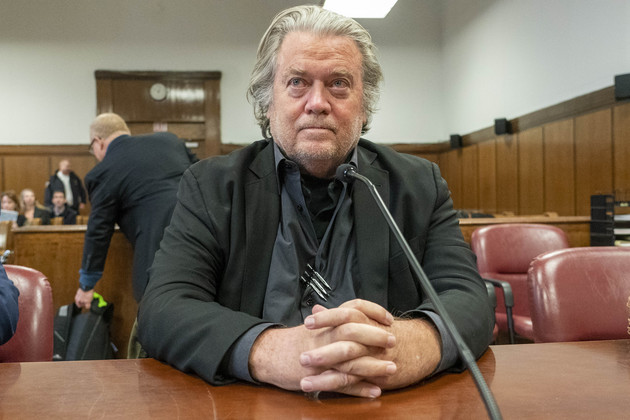
Steven Bannon, a former adviser to President Donald Trump, has been ordered to report to prison on July 1, 2024, following his conviction on charges of contempt of Congress. This development has sparked significant debate regarding its constitutionality and allegations of double standards within the justice system, particularly accusations of a liberal Democratic prosecutorial bias. The implications of this case and potential outcomes if Bannon refuses to comply with the order warrant close examination.

The Case Against Bannon
Bannon’s conviction stems from his refusal to comply with a subpoena issued by the House Select Committee investigating the January 6 Capitol riot. Bannon argued that his communications with the former president were protected by executive privilege. However, the court ruled that his claim of privilege did not exempt him from testifying before Congress, leading to his conviction on two counts of contempt.
Constitutionality of Bannon’s Conviction
The constitutionality of Bannon’s conviction hinges on the interpretation of executive privilege and congressional oversight. The U.S. Constitution grants Congress broad investigative powers, and while executive privilege exists to protect sensitive communications within the executive branch, it is not absolute. Courts have historically balanced these interests, often siding with congressional oversight in matters of significant public interest.
Bannon’s legal team argued that his actions were protected under executive privilege, but the court found this defense insufficient. Critics argue that the ruling undermines executive privilege and sets a precedent that could limit future presidents’ ability to seek candid advice from their advisers. Proponents of the ruling assert that it reinforces the accountability of government officials and the importance of congressional oversight.
The Disgusting Twisting of Pride
Double Standards in Prosecution
A prominent critique of Bannon’s prosecution is the perceived double standard within the justice system, particularly accusations that a liberal Democratic prosecutorial system is not holding its own accountable for similar or worse offenses. Critics point to several instances where prominent Democrats have allegedly evaded accountability. For example, some cite the handling of investigations into figures like Hillary Clinton and Hunter Biden, arguing that these cases did not receive the same rigorous prosecution.
The argument of a double standard is bolstered by the perception that politically motivated prosecutions are becoming more common. This belief is not limited to one side of the political spectrum; many conservatives view Bannon’s prosecution as a targeted attack, while some liberals argue that high-profile Republicans have similarly evaded justice. The broader concern is that the justice system is being weaponized for political purposes, undermining public trust in its impartiality.
Potential Consequences of Non-Compliance
If Bannon refuses to comply with the order to report to prison, several outcomes are possible. First, he could seek further legal recourse, appealing to higher courts, including the Supreme Court. If successful, this could lead to a stay of his sentence or even a reversal of his conviction. However, given the current legal landscape and previous rulings, this outcome seems unlikely.
Should Bannon simply refuse to report to prison without seeking further legal avenues, he would likely face additional legal consequences. Law enforcement could issue a warrant for his arrest, leading to forcible detention. This could escalate tensions and further polarize public opinion, with Bannon’s supporters potentially viewing him as a martyr for the conservative cause.
Non-compliance would also set a troubling precedent, encouraging others to defy court orders and undermining the rule of law. The justice system relies on the adherence to legal decisions, and widespread refusal to comply could lead to chaos and a breakdown of legal norms.
Listen to “ROI Conversations: The Queen of Men’s Health with Ali Gilbert” on Spreaker.
The case of Steven Bannon’s conviction and his impending imprisonment highlights significant issues within the American legal and political systems. The debate over the constitutionality of his conviction, allegations of prosecutorial double standards, and the potential consequences of non-compliance are all reflective of deeper, systemic challenges.
While Bannon’s supporters argue that he is a victim of a politically motivated prosecution, others view his conviction as a necessary assertion of congressional authority and accountability. The outcome of this case, and Bannon’s response, will likely have lasting implications for the balance of power between the branches of government and the perceived fairness of the American justice system.
Ultimately, this case underscores the importance of impartiality and adherence to the rule of law in maintaining public trust and ensuring the effective functioning of democratic institutions. As the situation unfolds, it will serve as a critical test of these principles in contemporary American society.