
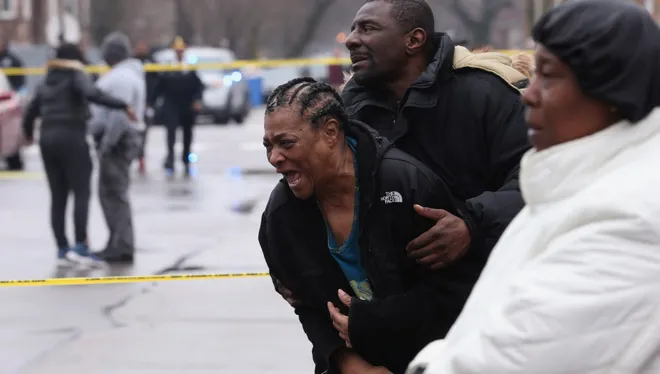
The year 2024 has seen a disturbing increase in violence across Chicago, with a rise in shootings, carjackings, and robberies causing a significant impact on residents and businesses. This escalating trend has not only threatened public safety but has also forced businesses to close or relocate, leaving neighborhoods struggling to cope with the fallout.

Rising Crime Rates and Their Impact
According to the Chicago Police Department’s annual crime statistics, the number of shootings in 2024 has increased by 20% compared to the previous year. Similarly, carjacking incidents have seen a staggering 25% increase, while robberies are up by 15%. This spike in crime has left residents feeling vulnerable and unsafe, with many expressing concerns about their personal security.
The impact on businesses has been equally severe. High-profile closures, such as the popular restaurant chain “X”, which shut down three locations in Chicago due to safety concerns, reflect the harsh reality many business owners face. The CEO of the chain cited “persistent violence and increasing risks to staff and customers” as the primary reasons for the closures.
The Human Cost of Violence
The surge in violence has also had a profound impact on Chicago’s residents. Families living in neighborhoods with high crime rates are increasingly worried about their children’s safety. Schools in these areas have reported a noticeable decline in attendance, as parents choose to keep their children at home to avoid the risks of commuting through dangerous areas.
Local community organizations, such as the “Chicago Neighborhood Watch,” have been working tirelessly to address these issues, but the sheer scale of the problem has made it difficult to maintain a sense of security. “We’re seeing more families leaving Chicago because they don’t feel safe,” said the organization’s director, citing a recent survey indicating that 40% of Chicago residents are considering moving to a safer city.
The Economic Consequences
The rising crime rates have also had a significant impact on Chicago’s economy. Businesses that rely on foot traffic have suffered, with some reporting a 30% drop in revenue due to customers’ fears about safety. This has led to layoffs and, in some cases, permanent closures, further exacerbating the city’s economic challenges.
Is it time for Americans to Use Violence against our Threats?
Listen to “Is it time for Americans to Use Violence against our Threats?” on Spreaker.
Commercial property values have declined in high-crime areas, and the real estate market has taken a hit as a result. A report by the “Chicago Real Estate Association” found that property values in neighborhoods with high crime rates have dropped by an average of 10% in 2024, leading to a decrease in property tax revenues and putting additional strain on city services.
The City’s Response
The City of Chicago has responded to this surge in violence with a multi-faceted approach, including increased police presence in high-crime areas and community outreach programs aimed at reducing crime through education and support. However, critics argue that these efforts have not been sufficient to address the root causes of violence.
Mayor Brandon Johnson has acknowledged the growing concern and has pledged to allocate more resources to crime prevention and community policing. However, with a city budget already stretched thin, it remains unclear whether these measures will be enough to reverse the trend.

Did they plan the fall of America’s Dad because he was black?
Looking Forward
The violence in Chicago in 2024 has raised critical questions about the future of the city. With businesses closing and residents leaving, the long-term impact on Chicago’s economy and social fabric could be severe. Addressing these issues will require a comprehensive approach that goes beyond law enforcement, focusing on community engagement, economic development, and education to create lasting change.
In conclusion, the rising violence in Chicago has had far-reaching effects on the city’s residents and businesses. The city’s response will play a crucial role in determining whether Chicago can reverse this troubling trend and restore a sense of safety and security for all who live and work there.