
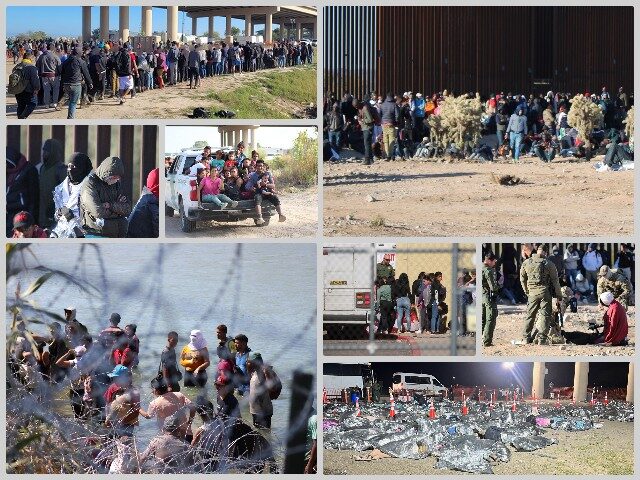
In a recent development, the Supreme Court has made a contentious decision to lift a stay on a Texas law, granting law enforcement sweeping authority to arrest migrants suspected of crossing the border unlawfully. This decision comes amidst a legal tug-of-war over immigration authority, pitting state rights against federal jurisdiction.

The law in question has been a focal point of intense debate, with proponents arguing for enhanced border security and opponents decrying potential violations of federal authority and international relations.
At the crux of the matter lies the Biden administration’s lawsuit seeking to invalidate the law, contending that it encroaches upon federal prerogatives and risks diplomatic fallout while complicating the already intricate landscape of immigration law administration.
Under this law, Texas law enforcement agencies are empowered to detain migrants suspected of illegal border crossings, pending legal proceedings.
Governor Greg Abbott has vehemently defended the legislation, characterizing the influx of migrants as an “invasion” and asserting Texas’s right to take robust action in response.
Groomers and Pedophiles are Coming for Your Children!
Listen to “Groomers and Pedophiles are Coming for Your Children!” on Spreaker.
However, the Supreme Court’s decision to lift the stay reflects a deeply divided judiciary, emblematic of the broader polarization surrounding immigration policy in the United States. The dissenting voices argue that the law undermines federal authority enshrined in the Constitution, potentially exacerbating tensions with neighboring countries and undermining diplomatic efforts aimed at addressing migration challenges.
For proponents of the law, the decision represents a significant victory in the ongoing battle to secure the border and enforce immigration laws at the state level. They contend that Texas, as a frontline state experiencing the brunt of illegal border crossings, has a compelling interest in fortifying its borders and safeguarding its communities.
Parents Who Raise WEAK Children
Conversely, critics warn of the law’s far-reaching implications, both domestically and internationally. They caution that empowering state law enforcement with such sweeping authority could lead to racial profiling, violations of due process, and erosion of trust within immigrant communities, hampering efforts to address legitimate public safety concerns.
Moreover, the decision raises fundamental questions about the balance of power between state and federal governments in matters of immigration enforcement. While states argue for greater autonomy to address localized challenges, opponents emphasize the need for a cohesive national strategy to tackle the complexities of migration and border security.
Beyond the legal ramifications, the decision holds profound implications for the lives of countless migrants caught in the crossfire of political and legal battles. With the specter of arrest looming large, many migrants face heightened uncertainty and fear as they navigate treacherous journeys in search of safety and opportunity.

CLICK HERE to Watch The Rants of Izzo Show!
As the legal battle over the Texas law unfolds, it underscores the urgent need for comprehensive immigration reform at the federal level. The current patchwork of state laws and executive actions only serves to exacerbate confusion and inequities, underscoring the imperative for bipartisan cooperation in crafting enduring solutions.
Ultimately, the Supreme Court’s decision serves as a stark reminder of the complexities and contentiousness inherent in immigration policy. It highlights the enduring tensions between competing interests, from national security imperatives to humanitarian concerns, and underscores the pressing need for principled leadership and constructive dialogue in charting the way forward.
YouTube’s Biggest Scammer Caught SCAMMING for Legal Fees!
In the midst of uncertainty and division, one thing remains clear: the need for a compassionate and rational approach to immigration that upholds the values of justice, fairness, and human dignity for all. Only through collective action and steadfast commitment to these ideals can we hope to navigate the challenges of migration with wisdom and integrity.