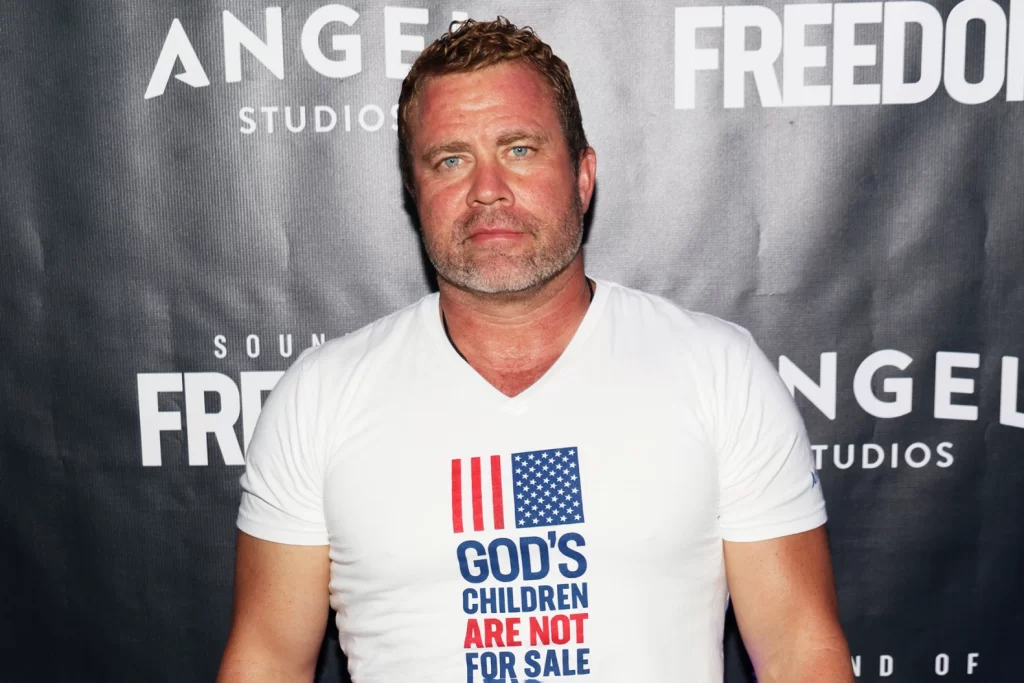
Following the recent theatrical release of The Sound of Freedom, Tim Ballard, the CEO of Operation Underground Railroad (O.U.R.), an anti-trafficking organization, has attracted significant attention.
However, not all of the attention has been positive. The film, which has earned almost $50 million, has faced criticism from experts in the field of anti-trafficking who argue that it inaccurately portrays child trafficking and that the tactics promoted in the film could endanger trafficked children.
Additionally, some have focused on Ballard himself and Operation Underground Railroad, highlighting his tendency to exaggerate his achievements and his recent involvement in conspiracy theories.
According to reports from Motherboard, a publication that has covered Operation Underground Railroad for years, Ballard is no longer affiliated with the organization.
Motherboard’s sources, along with a statement from O.U.R. provided to both Motherboard and Rolling Stone, confirm Ballard’s departure from the group before the release of Sound of Freedom.
Strangely, Ballard has not disclosed this information during his extensive promotional tour for the film. While Ballard is still prominently featured on the O.U.R. website and cited as a founder, the organization’s statement reveals that Matt Osborne currently serves as its president and COO.
Although the circumstances surrounding Ballard’s departure remain somewhat unclear, his LinkedIn profile states that he is now the CEO of the Nazarene Fund, a sister organization of O.U.R. that aids Christians and other religious minorities fleeing persecution in the Middle East.
In a recent appearance on Fox News, Ballard was also introduced as the founder of the SPEAR Fund, an organization that collaborates with anti-trafficking experts on various projects.
The film’s distributor, Angel Studios, acknowledged in a blog post on their website that certain biographical details of Ballard were altered in the movie and that creative liberties were taken in depicting different methods of child trafficking.
Critics, such as Erin Albright, an attorney with 15 years of experience in the anti-trafficking field, argue that the dangerous narratives perpetuated by the film are divorced from reality and can lead to harm.
She expressed concerns that such narratives hinder the passage of effective policies and prevent victims from recognizing their own experiences.
Teresa Huizar, CEO of the National Children’s Alliance, emphasized that there is no need to fabricate conspiracy theories about child sexual abuse, as there are already plenty of factual instances to address without spreading baseless rumors about Wayfair or pizza restaurants.
The Comet Ping Pong and Wayfair conspiracy theories are two separate but notable instances of alleged misinformation that gained attention on the internet.
The Comet Ping Pong conspiracy theory emerged in 2016 and alleged that a Washington, D.C. pizzeria called Comet Ping Pong was involved in a child sex trafficking ring led by high-ranking political figures.
The theory was based on alleged misinterpretations and fabrications of emails from John Podesta, a former chairman of Hillary Clinton’s presidential campaign, which were leaked during the 2016 U.S. election.
The conspiracy theory led to a highly publicized incident in which an individual, motivated by claims of child sex trafficking, entered the pizzeria and fired shots.
The Wayfair theory surfaced in 2020 and claimed that the online furniture retailer Wayfair was secretly involved in human trafficking. The theory was primarily based on the discovery of expensive cabinets and pillows with unusual names on Wayfair’s website.
Some speculated that these products were used as a front for the trafficking of missing children. However, there was no evidence to support these claims, and the theory was widely debunked. Wayfair issued statements refuting the allegations and explained that the high prices were due to industrial-grade materials used in their products.
Both the Comet Ping Pong and Wayfair cases highlight the dangers of misinformation and how it can spread rapidly online, leading to real-life consequences and negatively impacting businesses and individuals involved.
It serves as a reminder of the importance of critical thinking, fact-checking, and relying on credible sources when evaluating claims or engaging with online content.