
Biden admin quietly admits canceling Keystone XL Pipeline cost thousands of jobs, billions of dollars. The report, which was released this week the Department of Energy acknowledged as much.
Biden’s decision to revoke the federal permits for the Keystone XL pipeline cost a potential economic boon to both the United States and Canada. The project was expected to create thousands of jobs and generate billions of dollars in economic activity, but all that potential has been lost due to one executive order.
“The Biden administration finally owned up to what we have known all along — killing the Keystone XL Pipeline cost good-paying jobs, hurt Montana’s economy and was the first step in the Biden administration’s war on oil and gas production in the United States,” Sen. Steve Daines. R-Mont., said Thursday in a statement. “Unfortunately, the administration continues to pursue energy production anywhere but the United States.”
“These policies may appeal to the woke left but hurt Montana’s working families,” he continued. “I’ll keep fighting back against Biden’s anti-energy agenda and supporting Montana energy projects and jobs.”
After Daines and Sen. Jim Risch, R-Idaho, successfully included a measure demanding the study into the Infrastructure Investment and Jobs Act, which Biden signed into law in November 2021, the DOE was compelled to release the report. The government was obligated to publish the study within 90 days of the bill’s enactment, but it took more than a year to do so.
The DOE stated in a statement Thursday that the project would have had negligible long-term job consequences, but did not mention the thousands of jobs that were anticipated to be created during pipeline construction.
“The U.S. Department of Energy released a report evaluating existing analysis on economic and job effects of the XL portion of Keystone pipeline,” the DOE told Fox News Digital. “It concluded there were limited job impacts, with approximately 50 permanent jobs estimated to have been created were the pipeline operational.”
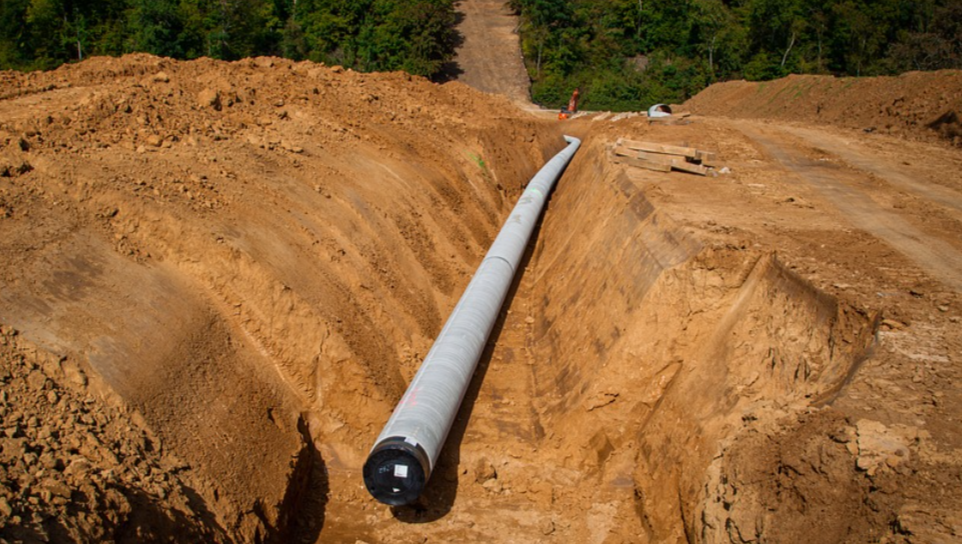
The Keystone XL (KXL) pipeline was intended as an expansion of an existing transportation network that delivers oil from Alberta, Canada, down through Montana and South Dakota into Nebraska. The new pipeline would have provided an additional 1,179 miles of pipe to accommodate increased production from Canadian oil sands projects.
The KXL was estimated to cost $8 billion and would have created thousands of direct jobs during its construction phase, with up to 21,000 total jobs being added across multiple industries over two years according to government estimates.
In addition to creating job opportunities during its construction phase, the completion of the KXL pipeline was expected to generate significant long-term economic benefits in both countries affected by it — Canada and the United States. In Canada alone, it was projected that completion of the project could result in $55 billion CAD ($41 billion USD) in cumulative GDP growth over 20 years while generating hundreds of millions more in taxes revenue each year for provincial governments involved with its development — Alberta being one primary example.
In terms of U.S.-specific impacts, energy consulting firm IHS Markit concluded that if completed as planned by 2021 or 2022, then KXL would have contributed approximately $3-$4 billion annually in economic output within North America along with 16 thousand direct jobs (with some estimates reaching 59 thousand) while also providing a boost in wages via labor costs associated with constructing and operating this massive infrastructure project.
Despite these projections showing significant potential gains on both sides of border however President Biden chose not waste any time after taking office before revoking all necessary federal permits necessary for completion of this transnational endeavor on Jan 20th 2021 — thus effectively killing any possibility that this important piece infrastructure will ever be constructed or benefit either country involved economically going forward.
Worst of all, Biden’s decision directly impacted the United State’s energy independence.