
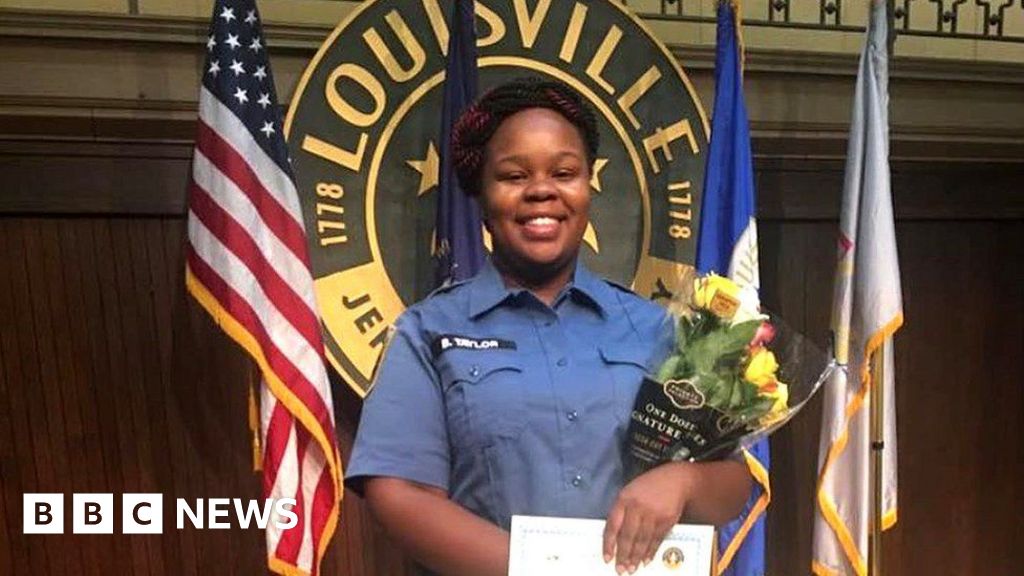
In a controversial decision that has reignited debates over law enforcement accountability, a federal judge recently dismissed major felony charges against two former Louisville police officers involved in the 2020 raid that led to Breonna Taylor’s death. U.S. District Judge Charles Simpson III ruled that the actions of Taylor’s boyfriend, Kenneth Walker, who fired a shot at police officers during the raid, were the legal cause of her death, rather than the flawed warrant that led officers to her door.
The officers in question, former Detective Joshua Jaynes and former Sergeant Kyle Meany, were accused of falsifying the warrant used to justify the “no-knock” raid on Taylor’s apartment. The warrant, based on false information, led to the tragic events of that night, where Taylor, an unarmed Black woman, was fatally shot by police after Walker, believing the officers to be intruders, fired his legally owned firearm. Although Jaynes and Meany were not physically present during the raid, they were charged with civil rights violations that could have resulted in life sentences.
Judge Simpson’s ruling significantly reduces the severity of the charges against the former officers, downgrading them to misdemeanors. This decision has sparked outrage among Taylor’s family, civil rights advocates, and many who have followed the case closely. The ruling suggests that while the warrant may have been flawed, the fatal shot fired by Walker was considered the direct cause of Taylor’s death, thus shifting the focus of legal responsibility.
The case has been a focal point in the broader movement against police brutality, particularly in its intersection with issues of racial justice. The events leading to Taylor’s death and the subsequent legal proceedings have drawn national and international attention, highlighting the ongoing challenges in holding law enforcement accountable for actions that result in the deaths of civilians, especially those from marginalized communities.
Keep Your Dick out of Women’s Sports!
Listen to “Keep Your Dick out of Women’s Sports!” on Spreaker.
Attorney General Merrick Garland had previously emphasized the importance of the charges against Jaynes and Meany as a critical step in upholding civil rights and ensuring justice. However, Judge Simpson’s ruling now casts doubt on the likelihood of severe consequences for the officers involved, even as some charges remain. The conspiracy charge against Jaynes and another charge against Meany for making false statements to investigators will still proceed, ensuring that the legal process continues.
The reaction to the ruling underscores the deep divisions in public opinion regarding police accountability and the justice system’s ability to address cases of alleged misconduct effectively. Supporters of the judge’s decision argue that it correctly applies the law by focusing on the immediate cause of Taylor’s death, while critics see it as a failure to fully address the broader context of the raid and the systemic issues it represents.
Did you know how bad freedom truly is for your soul? CLICK HERE to Watch The Rants of Izzo Show!
The legal battles surrounding the case are far from over. Federal prosecutors have indicated plans to appeal the decision, and other related legal proceedings, including the retrial of former officer Brett Hankison on charges of endangering Taylor, Walker, and their neighbors through excessive use of force, are ongoing. As these cases progress, they will continue to shape the national conversation about police practices, civil rights, and the quest for justice in cases involving law enforcement officers.
This ruling is a stark reminder of the complexities involved in cases of police-related deaths, where legal interpretations of responsibility can lead to outcomes that may not align with public expectations of justice. As the legal system continues to navigate these challenges, the Breonna Taylor case remains a powerful symbol of the urgent need for reforms that address both individual accountability and the broader systemic issues within American law enforcement.
Connect with me:
Send me any story that you come across that we can feature on our newsletter or show [email protected]
Leave a text, voice note or voicemail for the show on what your thoughts are at 708-982-0974
Connect with me on Spreely Social CLICK HERE to Check out Spreely Social
-Izzo